The secret of popularity
It’s simple—just add a tiny amount of salt to ground or brewed coffee. This is done to adjust the flavor profile. At first glance, this combination seems paradoxical, since this ingredient is traditionally associated with dishes rather than beverages—which are typically sweetened and served with sweets. However, in modern gastronomy, such contrasts are seen as a way to highlight the complexity of flavor.
The popularity of coffee with salt stems from broader trends in coffee culture: an interest in alternative brewing methods, experimentation with flavor profiles, and a return to local and traditional practices.
Consumers’ first impressions are often accompanied by skepticism, but experience usually breaks down stereotypes, as tasters note a milder and more balanced taste.
History and cultural traditions of use
The practice of adding salt to coffee can be traced back to different cultures and regions. It often served not only a flavoring but also a ritual function.
Turkey and Ottoman Heritage
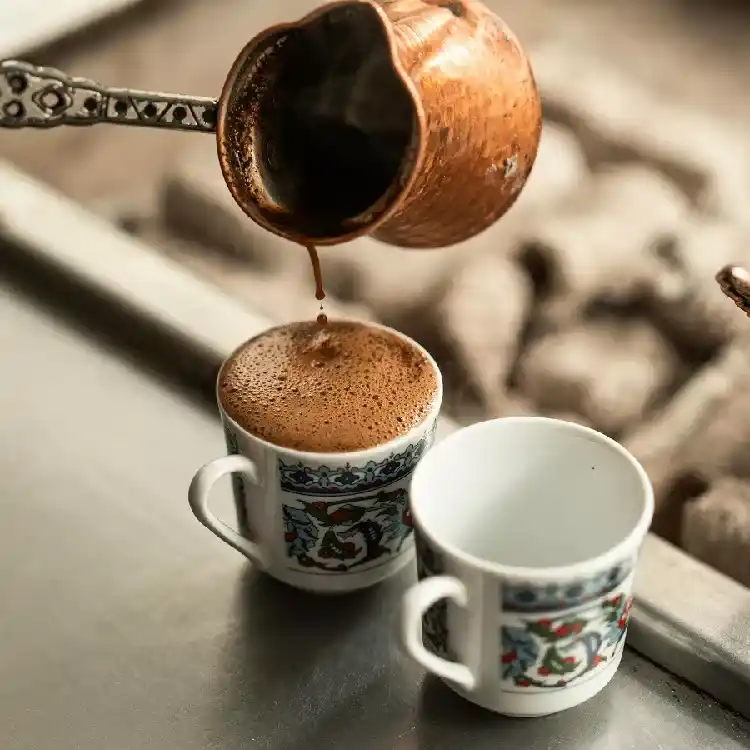
In the Ottoman tradition, coffee was an element of social ritual. In some regions, a pinch of salt was added to coffee as a symbol of hospitality or a test for the groom during wedding ceremonies. The ritualized nature of coffee brewing and the slowness of the process reflected its special place as a socially significant element of everyday culture.
Scandinavian countries
In Norway and Sweden, salt was sometimes added to coffee brewed over an open fire. This practice is related to the maritime culture and lifestyle of fishermen, for whom it was an affordable ingredient that helped to soften the bitterness of poor quality beans.
Ethiopia
In Ethiopia, the birthplace of coffee beans, traditional recipes call for the use of spices and salt instead of sugar. This beverage highlights the natural bean profile and is an integral part of the country’s cultural heritage.

Scientific justification for adding salt to coffee
Affects the senses
Research on the chemical properties of coffee shows that adding a pinch of salt modifies the organoleptic sensation by suppressing bitterness. At the same time, salt enhances sweet coffee notes and smooths out acidity, making your drink taste more rounded.
Experiments by coffee experts
According to laboratory sensory studies, adding salt reduces the bitterness of coffee without changing the perception of its flavor. Public experiments and studies by experts such as James Hoffmann and Scott Rao have confirmed that microdoses can improve the sensory profile of a drink.
The benefits of coffee with salt for the body
Replenish electrolyte balance
Salt is a source of sodium, an important electrolyte needed for nerve signaling and muscle contraction.In moderation, coffee with salt can help you recover from exercise.
Benefits in hot weather
In the heat of the day, coffee with salt helps maintain a normal water balance and helps avoid dehydration if consumed in moderation.
Classic recipes
Basic recipe
To make classic coffee, you need 10-12 grams of freshly ground beans, 200 ml of water, and 1-2 salt crystals. They are usually added to the grind before brewing. The optimal water temperature is 92-96 °C.
Coffee with Salt and Cognac
The alcoholic version involves adding a small amount of high-quality cognac after brewing. It’s important to maintain a balance so that the alcohol doesn’t overpower the coffee’s flavor profile.
Choosing the right ingredients
Coffee beans
Medium-roast beans with a pronounced sweetness are best suited. The grind should be appropriate for the brewing method.
Types of Salt
There are various types of salt: sea salt, pink Himalayan salt, table salt, rock salt, iodized salt, black salt, and salt blended with herbs or spices. Sea salt, or pink Himalayan salt, has a milder taste than refined table salt. The number of crystals should not exceed a few per serving.
Technique for proper use
The best temperature for tasting coffee with salt is 60-65 °C. Drink in small sips, combining coffee with neutral dishes.

Common mistakes and ways to avoid them
The most common mistake is excess salt, which makes coffee unpleasantly salty. Baristas advise starting with a few crystals and gradually adjusting the dose according to your preferences. It is also important to cook with high-quality, non-iodized salt, without impurities. Remember that salt in coffee made from low-quality beans will not compensate for the taste, but rather emphasize the flaws. Failure to observe the technology, such as improper grinding, water temperature, or proportions, also negatively affects the result.
Variations and modern interpretations
Modern coffee shops offer original recipes with the addition of spices or alternative types of salt, such as sea salt, Himalayan pink salt, smoked salt, etc. Home experiments allow you to create unique combinations adapted to your own preferences and different brewing methods.
Conclusions and recommendations
Salted coffee is an example of a harmonious combination of tradition and science. It demonstrates how a simple ingredient can change sensory perception. Beginners should stick to classic proportions and gradually experiment. The prospects for the development of this trend are associated with author’s recipes, gastronomic combinations and scientific research that open up new opportunities for coffee culture.