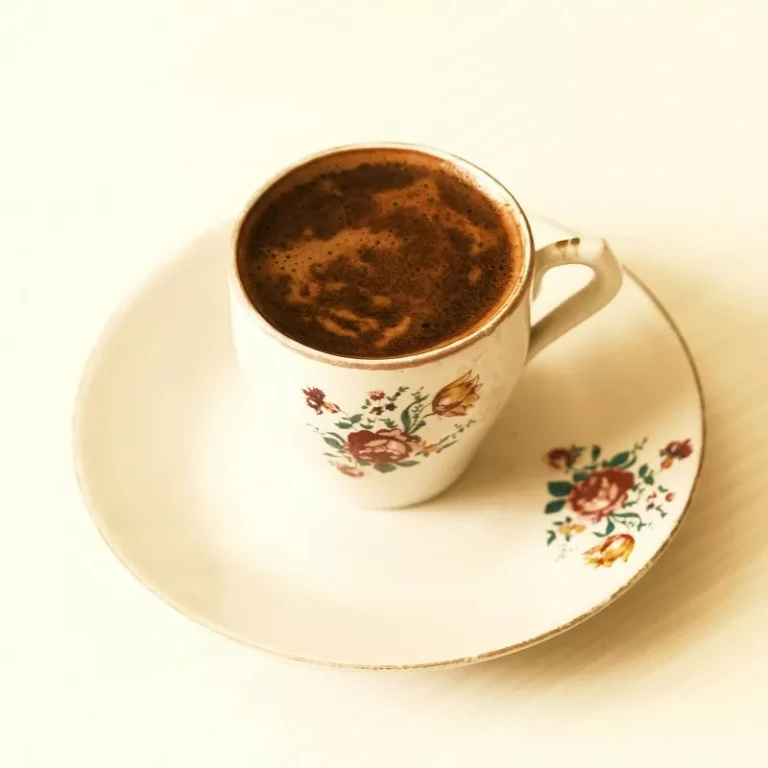
Did you know that making coffee in a jezve is an ancient art that combines tradition, technique, and incredible flavor? This brewing method, also known as Turkish coffee, allows you to reveal the full depth of the beans’ flavor and create a drink that can turn an ordinary morning into a real ritual.
What is jezwa and its features?
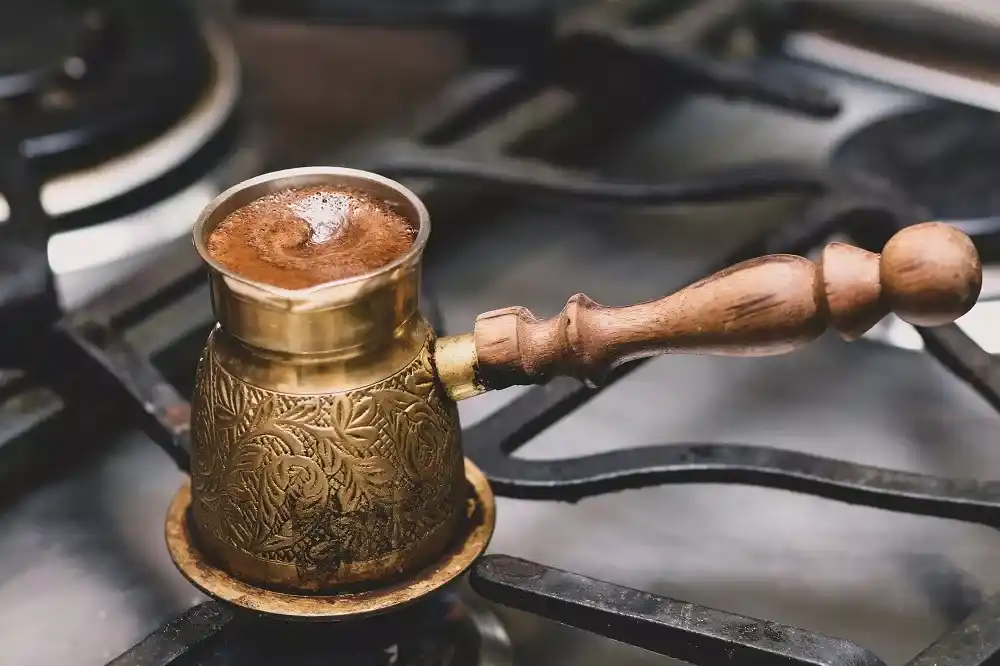
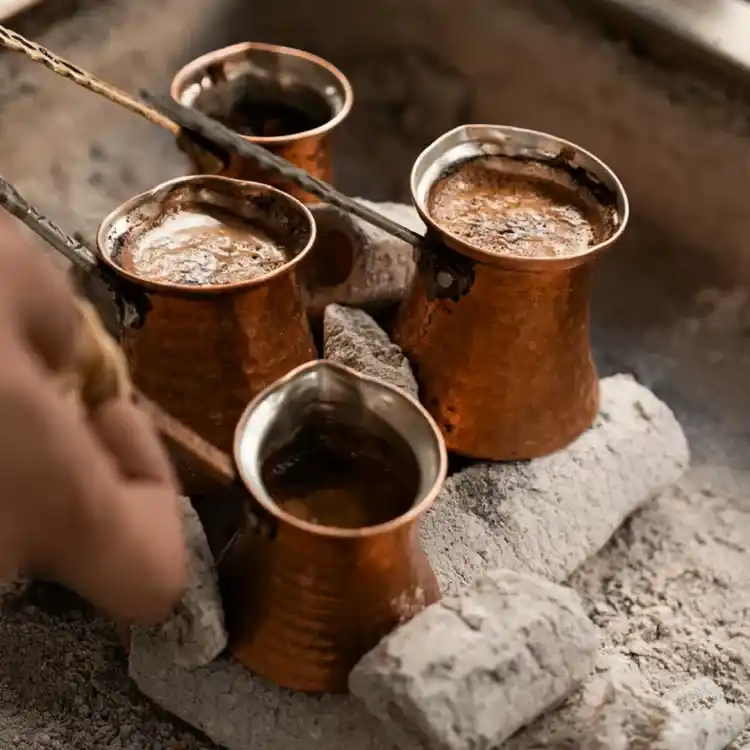
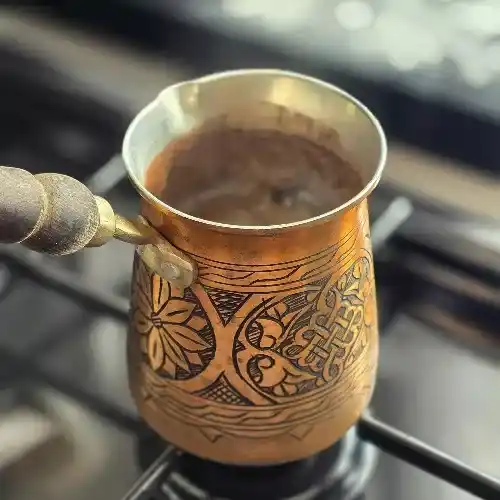
A cezve (or Turkish coffee pot) is a special vessel for brewing coffee, characterized by its distinctive shape with a narrow neck and wide base. This design is no accident: it ensures that the coffee heats evenly and creates optimal conditions for forming a thick foam.
The main characteristics of a quality djezva:
- Material: tin-plated copper or stainless steel
- Volume: from 100 to 500 ml (optimally 150-200 ml for 1-2 servings)
- Shape: conical with a narrow neck
- Handle: long to avoid burns
Why are copper jezves considered the best? It’s simple: they have excellent thermal conductivity. This ensures even heating and allows you to precisely control the cooking temperature.
Choosing coffee for jezveh
Did you know that the success of brewing coffee in a cezve depends largely on the quality of the beans and the correct grind? Not all coffee varieties are equally well-suited for this brewing method.
Optimal coffee varieties
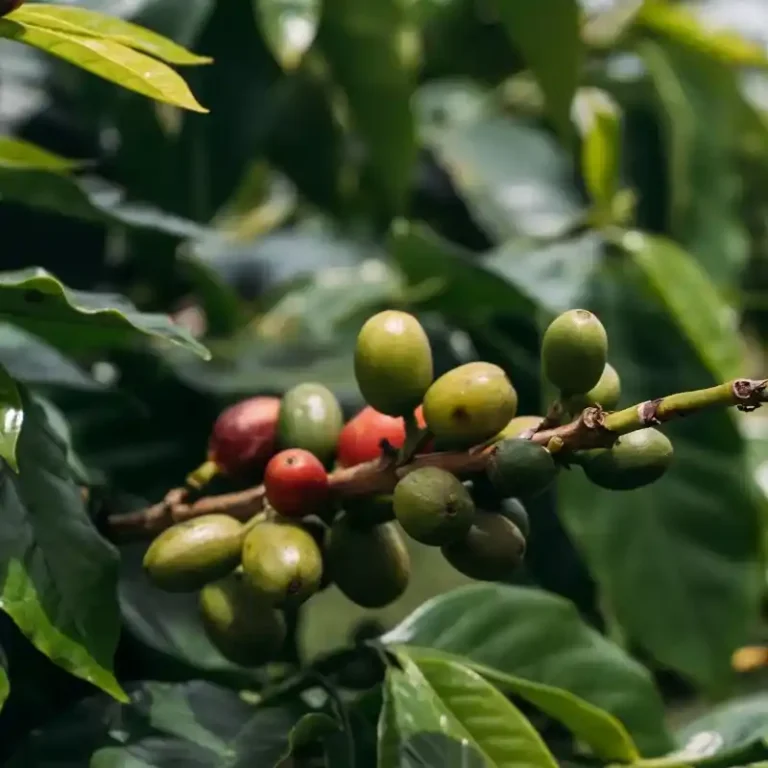
Arabica remains the best choice for jezve due to its complex flavor profile and low caffeine content. They have proven to be particularly good:
- Ethiopian Arabica with fruity notes
- Brazilian Arabica with a nutty flavor
- Colombian Arabica with chocolate notes
Each of these varieties has its own unique characteristics. Ethiopian coffee, for example, is often characterized by bright acidity and floral notes, while Brazilian coffee tends to have a more balanced, sweet profile.
Grinding rules
The grounds for the djezva should be extremely fine (almost like powder). This is critical for several reasons:
- Fine grinding ensures maximum flavor extraction
- Creates a characteristic texture of the drink
- Allows you to form a thick foam
Important
Grind the coffee just before brewing. Pre-ground coffee loses its flavor within 15-20 minutes.
Step-by-step cooking process
Making coffee in a jezve requires attention and precision. Each stage affects the final result, so let’s take a closer look at them.
Preparatory stage
- Calculate the proportions: 6-8 grams of coffee per 100 ml of water
- Prepare the water: use filtered water at room temperature
- Warm up the dzhezwa: put an empty turkey on the fire for 30 seconds
The main process
Step 1: Mixing the ingredients
Pour the ground coffee into the jezve, add sugar to taste (if necessary) and cold water. Mix thoroughly until smooth. Some masters recommend mixing dry coffee with sugar first, and then adding water.
Step 2: Heating
Put the jezve on the lowest heat. Why the lowest? The heating process should be slow, this is the key to success. Rapid heating will not allow the coffee to reveal its full flavor.
Step 3: Foam control
When foam begins to appear on the surface, watch the process carefully. The foam should rise gradually. This is the most crucial moment!
Step 4: Remove from the fire
As soon as the foam starts to rise to the edges of the drip pan, remove it from the heat immediately. Do not let the coffee boil! Boiling will kill all the flavor and aroma.
Final submission
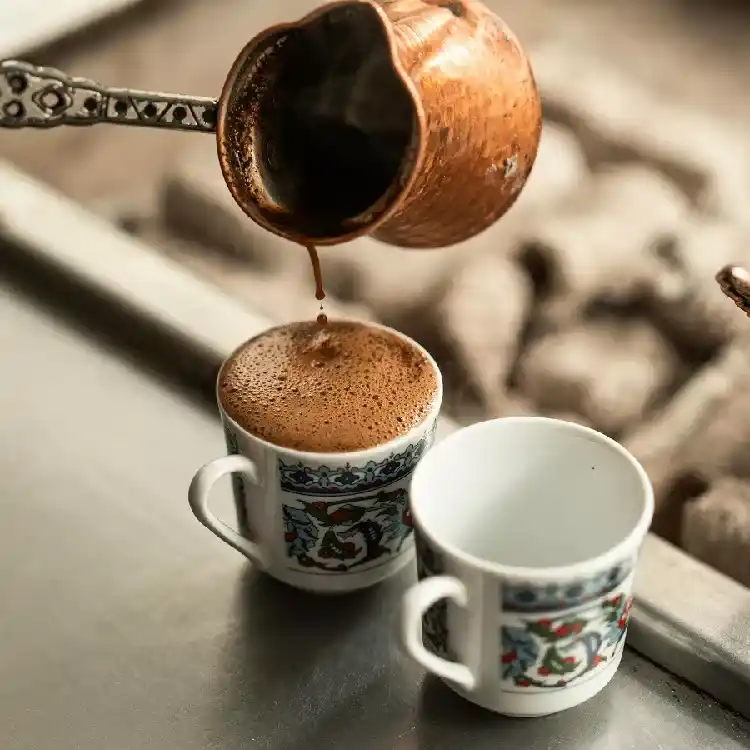
Allow the coffee to stand for 30 seconds before pouring. This will allow the smallest particles to settle and make the drink clearer. Pour slowly, making sure to keep the foam in each cup.
Secrets of the perfect foam
A thick, steady foam (also called “kaymak”) is the hallmark of a properly brewed coffee in a jezve. Here’s how to achieve it:
Temperature conditions
Foam forms at a temperature of 60-70°CSource. If you heat the coffee too quickly, the foam will not have time to form.
The “three lifts” technique
Some craftsmen practice the method of three rises of the foam: letting it rise, removing it from the heat, letting it fall, and repeating the process three times. This creates a richer flavor.
Proper mixing
Stir the coffee only at the beginning. Once the coffee starts to heat, any interference will destroy the foam.
Have you ever wondered why foam is so important? Not only is it beautiful, but it also serves as a “lid” that preserves the aroma of coffee.
Common mistakes and how to avoid them
| Error. | Consequence. | Solution. |
| Too much fire | Coffee boils and loses its flavor | Use minimal fire |
| Coarse grinding | Weak taste, poor foam | Grind coffee to a powder consistency |
| Stirring during heating | Destruction of foam | Stir only at the beginning |
| Use of hot water | Uncontrolled process | Always start with cold water |
Recipe variations
Classic Turkish coffee
- 6 g of finely ground coffee
- 60 ml of cold water
- Sugar to taste
This is a basic recipe to start your experiments with. Remember: it’s no accident that classics became classics!
Coffee with cardamom
Add a pinch of ground cardamom seeds with your coffee. This will give the drink an oriental flavor. This option is considered traditional in Arab countries.
Cinnamon coffee
A small amount of ground cinnamon added at the mixing stage will create a warm, spicy flavor. It goes especially well with the fall weather (although who’s to say you can’t enjoy it in the summer?).
Coffee with chocolate
Add a teaspoon of cocoa powder to create a mocha effect. This is a great option for those with a sweet tooth.
Caring for the daisy
Proper care extends the life of your cezve and affects the taste of your coffee. Here are the basic rules:
After each use:
- Rinse with lukewarm water without detergents
- Dry completely
- Store in a dry place
Weekly cleaning:
- Boil water with lemon juice to remove plaque
- Wipe the outer surface with a soft cloth
Key tips
- Never use abrasive cleaning products
- Avoid sudden changes in temperature
- Do not leave the jezve wet for a long time
Copper jezvehs can darken over time. This is normal! Patina even improves thermal conductivity. If you want to bring back the shine, use a mixture of salt and lemon juice.
Cultural significance of coffee in jezve
Coffee in jezve is not just a drink, but a cultural phenomenon. There is a saying in Turkey: “A cup of coffee is remembered for forty years”. This reflects a deep respect for the tradition of coffee drinking.
In many countries of the Middle East, serving coffee to guests is considered a manifestation of hospitality. Refusing the offered coffee can be perceived as an insult. Interesting, isn’t it?
The art of making coffee in a jezve requires practice and patience. Each attempt brings you closer to the perfect result, to a drink that combines the traditions of centuries and the unique taste of real coffee. Don’t be afraid to experiment!
Frequently asked questions
How long does it take to make coffee in a jezve?
The complete process takes 3-5 minutes depending on the volume of the drip pan and the intensity of the fire. It is important to take your time, as slow heating is the key to creating high-quality foam and bringing out the flavor of the coffee.
Can I use regular coffee from the supermarket?
Yes, but the result will be better with freshly roasted, finely ground coffee. Avoid instant coffee, as it is not suitable for use in a jezve and will not produce the characteristic foam and flavor.
What to do if foam does not form?
The most common causes are grinding the coffee too coarsely, heating too quickly, or using hot water. Try grinding the coffee more finely and reducing the heat to heat it more slowly.
Can I make coffee in a jezve on an induction cooker?
Yes, if the jezve is made of a material compatible with induction (for example, stainless steel). Copper pots require a special adapter or the use of a gas or electric stove.
How many times can you brew the same coffee?
The coffee in the jezve is not re-brewed, each serving is made from fresh coffee. Used coffee loses its flavor and will not produce proper foam when brewed again.