What is Butch Brew?
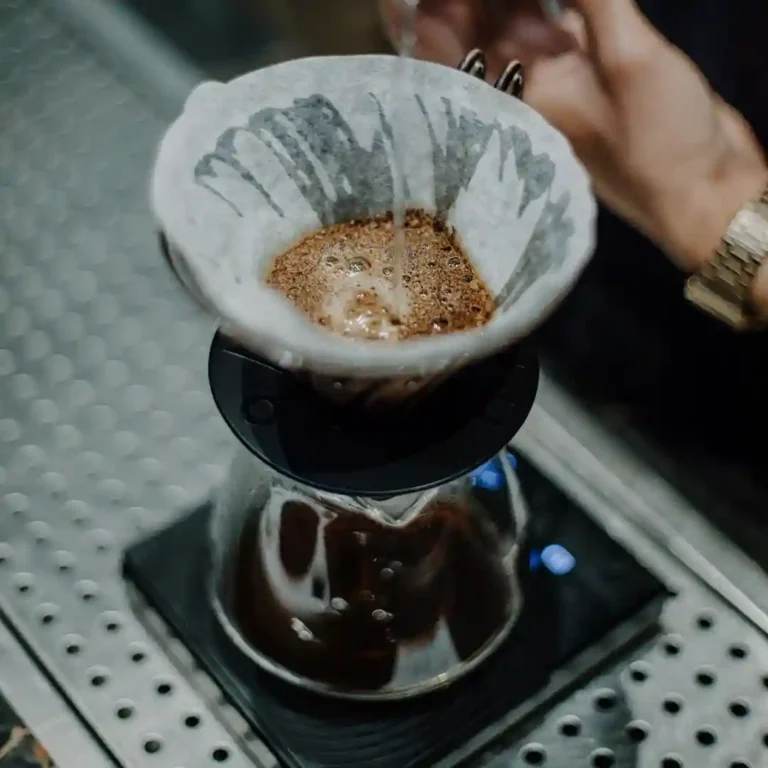
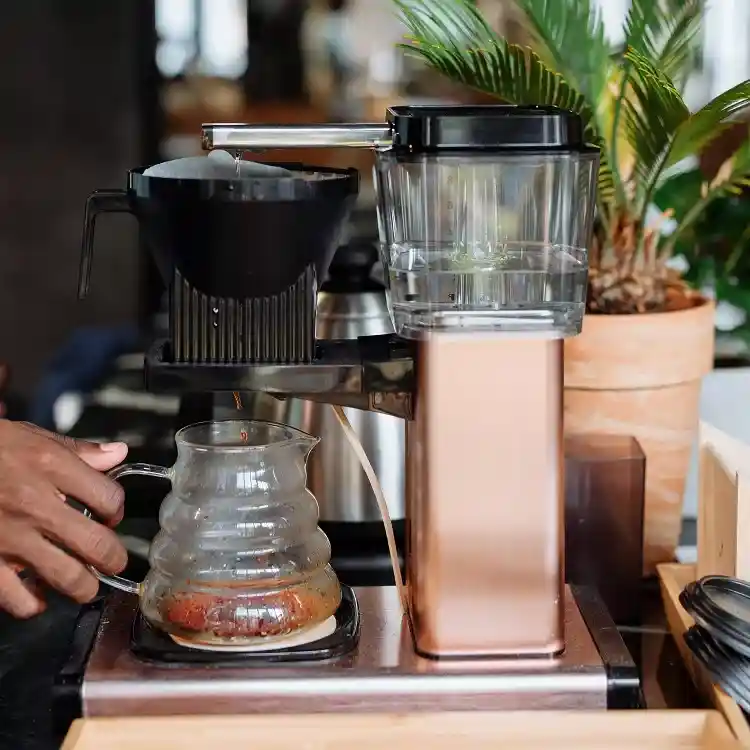
Batch Brew is a method of brewing coffee in which a large portion of the drink is prepared automatically in a special filtration machine. It’s a simple technology: hot water passes evenly through a layer of ground coffee and flows into a server or thermos. The method ensures automation and stability. Unlike manual methods, where everything is controlled by the barista, the result of a batch brew is determined by the machine settings and the accuracy of the recipe.
Main characteristics of the method:
- large volumes,
- sustainable taste
- minimal dependence on the human factor.
Batch Brew allows you to serve many guests at the same time and get a consistently high quality drink throughout the day.
The history of Butch Brew
The first automatic coffee filtering machines appeared in the United States at the turn of the nineteenth and twentieth centuries, when the demand for fast and inexpensive brewing of drinks grew rapidly. They were primitive, but they laid the foundation for the modern-day Batch Brew. Further development of the method occurred in the mid-twentieth century, when manufacturers modernized the design, improved filters and the heating system.
The widespread use of automatic filter coffee machines in coffee shops and fast food establishments has set the standard for filter coffee taste, which has long been considered the benchmark.
For a long time, consumers have been focused on mild filter coffee in large portions. When espresso culture began to dominate, baristas began to adapt recipes to offer larger drinks with a familiar profile. Here, the batch brew played the role of a foundation for new interpretations of classic coffee formats.
Equipment for preparation of Batch Brew
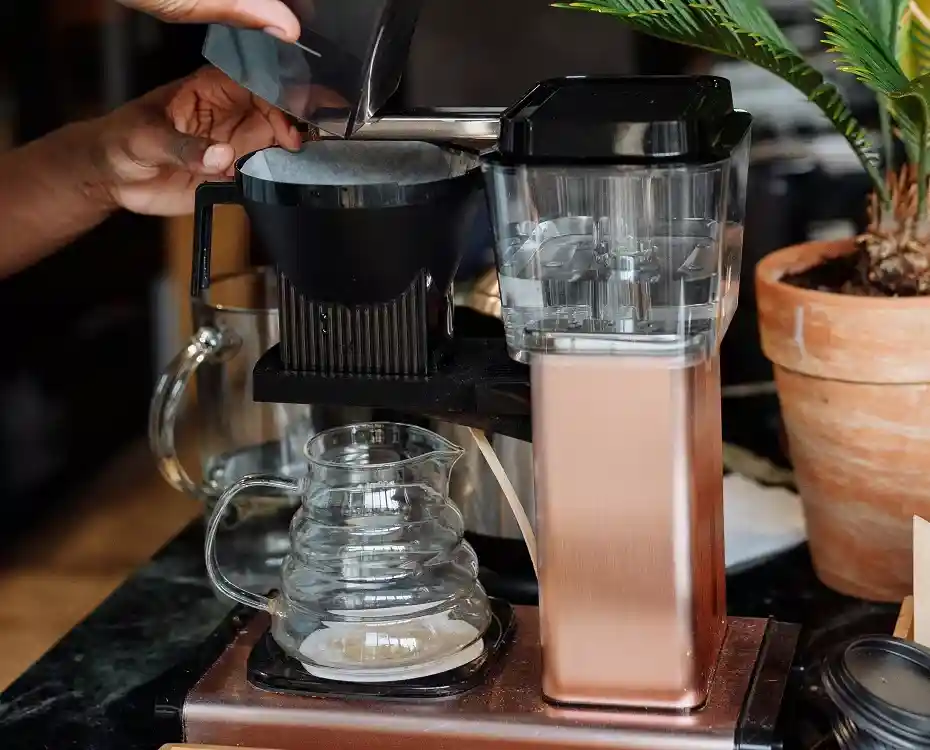
The core of the lineup consists of automatic filter coffee makers: ranging from large industrial units to compact models for home use. Professional machines are equipped with a precision heating system, programmable settings, water flow sensors, and thermos-style servers that keep the beverage fresh. Home appliances are much simpler, but the operating principle is the same: water is heated to a set temperature, passes through a filter containing coffee, and flows into a carafe. Equipment is chosen based on specific needs: from the required brewing volume to customization options, heating stability, and brewing speed. The main criterion is the machine’s ability to maintain a consistent temperature and evenly saturate the coffee throughout the entire extraction cycle.
Technology of preparation of Batch Brew
The process consists of several sequential steps. First, the barista sets the basic parameters: the ratio of coffee to water, temperature, and extraction time. The standard ratio is 55-65 grams of ground beans per liter of water, but it is adjusted depending on the degree of roasting and the desired flavor profile.
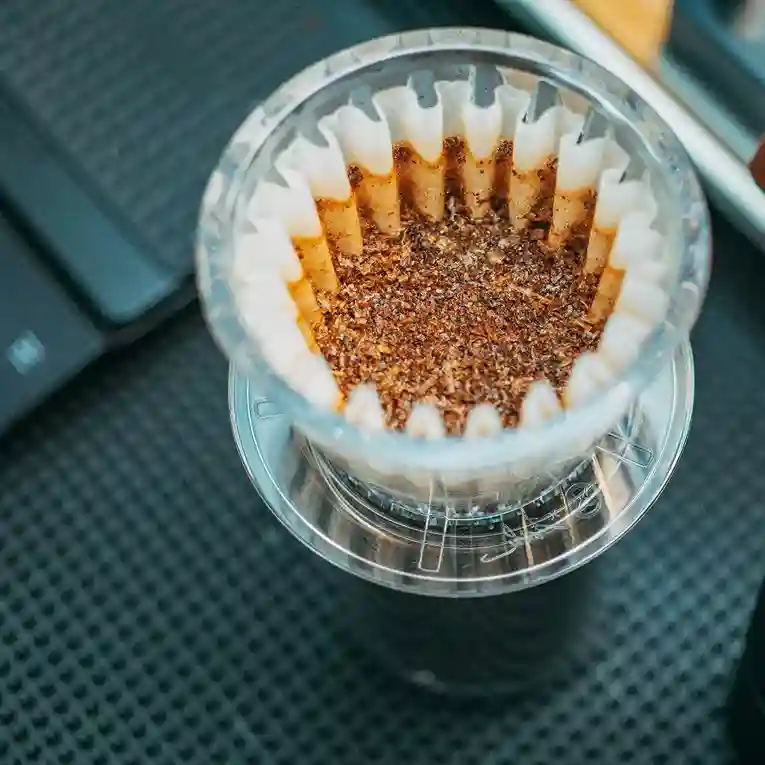
The ground coffee is poured into the filter, and the machine automatically feeds water, which usually has a temperature of 92-96 °C. The first seconds are responsible for preinfusion – wetting the coffee layer, which contributes to uniform extraction. Then the water flows in a steady stream until the cycle is complete. The process usually takes 4-7 minutes. The finished drink is stored in a server that maintains the optimum temperature without overheating.
Advantages of the Batch-Brew method
The most obvious advantage is efficiency. The machine brews several liters of coffee at once, reducing time and human resources. In establishments with a high flow of visitors, this is especially valuable: the barista can focus on other tasks while the machine is working.
The second advantage is the consistency of taste. Since all parameters are automated, human errors are minimized. The customer always receives the same quality drink, regardless of who is serving the shift and how busy the barista is, which allows us to maintain the stability of the service even during peak hours.
The third is the ability to serve large volumes without queues. The drink is available instantly, which makes Butch Blue a profitable solution for coffee shops, offices, catering and hotels.
Disadvantages and limits of use of Butch-Bru
The biggest disadvantage is the loss of freshness over time. Filter coffee tastes best right after brewing; after 30-60 minutes, the aroma begins to diminish and the taste becomes flat and uninteresting. Even the best thermoses cannot stop the natural oxidation process.
The second disadvantage is less control over individual portions. While a manual pourover allows you to customize the recipe for a specific bean or guest, the Butch-Brew works according to one standard for the entire volume. This is good for stability, but limits the barista’s creativity.
It is also possible that the flavor quality may be lower than with manual methods if the machine is not set up correctly or if the beans are not suitable for automatic filtering.
Batch Brew in modern coffee culture
With the development of the third wave of coffee, the method took on a new meaning. Coffee shops began to use Batch Brew not as a cheap alternative, but as a full-fledged way to serve filter coffee made from high-quality beans. Modern machines reproduce profiles that are close to those created by baristas by hand, and due to their high accuracy and stability, sometimes even surpass them.
The method has become popular in establishments where speed without loss of taste is important. Butch Brew is also actively used at championships and exhibitions where it is necessary to treat a large flow of people without sacrificing quality.
Comparison with other brewing methods
Unlike espresso, which is brewed under high pressure, Batch Brew is based on water passing through a filter under the influence of gravity. This results in a milder flavor, cleaner profile, and more subtle acidity. Compared to manual filter coffee, the quality of the drink is less dependent on the barista’s skills, but the room for variation is more limited.
The French press works on a completely different principle – full immersion, which produces a thicker drink with more pronounced oils. In the Butch-Bru, the filter retains small particles, so the texture is cleaner. Compared to alternatives such as an air press or a kemex, the Batch Brew wins in speed and stability, but loses in the ability to customize each serving individually.
Tips for making a quality Batch Brew
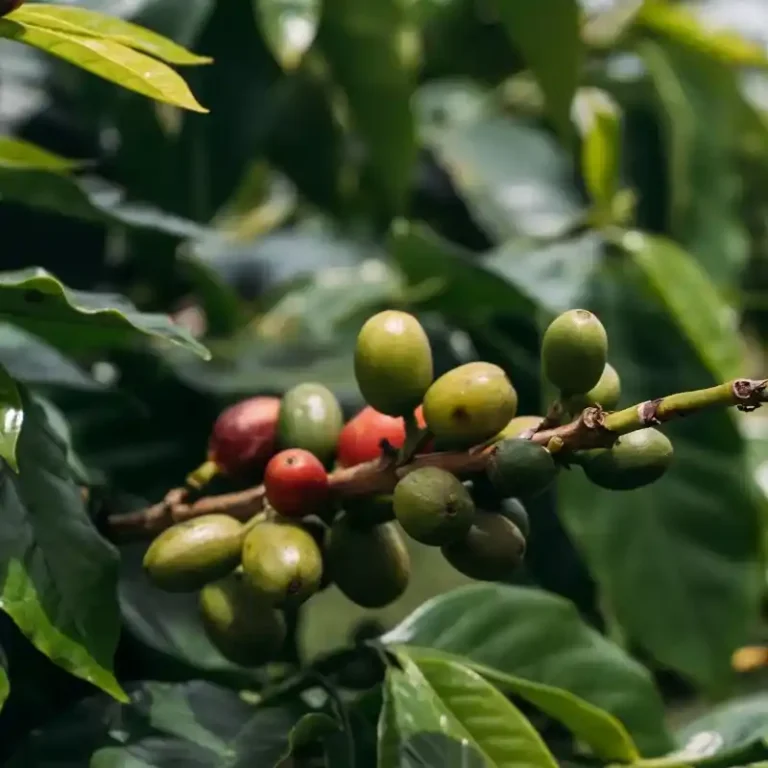
A light to medium roast is best for this method: the fruit notes and acidity are conveyed cleanly and in balance. The grind should be medium, close to a hand filter.
Follow the universal proportions: approximately 6 grams of coffee per 100 ml of water. It’s also important to check the quality of the water: its mineralization significantly affects the taste. It’s best not to keep the finished coffee in the server for more than 45 minutes, and clean the machine regularly to avoid off-flavors.