For many coffee connoisseurs, the ritual of brewing coffee in the morning begins with grinding the beans, because the most flavorful coffee can only be obtained by grinding just before brewing. Its quality is one of the key factors that determines the aroma and taste. And it depends not only on the quality of the beans, but also on the right choice of grinder.
It is the grinder that grinds the coffee, determining the speed of extraction and the uniformity of the taste of the future cup. Not only does the texture of the drink depend on how finely or coarsely the beans are ground, but also its richness, sourness, and bitterness.
High-quality grinding ensures the full extraction of aromatic compounds, while improper grinding leads to under-extraction or excessive heating. Therefore, investing in a coffee grinder is a top priority for those who appreciate the deep flavor and aroma of coffee.
Types of coffee grinders and their features
Knife (rotary) coffee grinders
Knife, or rotary, grinders work by using cutting blades that rotate at a high frequency. The beans fall into a bowl, where the blades cut them into pieces of different sizes.
Advantages:
- Speed: Rotary models are capable of grinding a significant amount of beans in a short time, which is convenient for family morning rituals or brewing a large number of cups at once.
- Simple design: a small number of moving parts make knife grinders easy to use and maintain.
- Affordability: These models are usually cheaper than millstone models, which makes them attractive to beginners.
Disadvantages:
- Uneven grinding: Due to the different particle sizes, extraction can be unstable, which affects the taste of the beverage.
- Excessive heating: High blade speeds increase the temperature of the beans, which can reduce the flavor and change the taste of the drink.
- Limited precision: It is not possible to set the grind to a very fine level, which is critical for espresso or specialty brewing methods.
Knife grinders are ideal for beginners, people who brew coffee infrequently, or those who value speed and simplicity over professional precision. They are suitable for making coffee in a pot, filter coffee maker, or automatic coffee machine when speed is more important than precise grinding.
Electric millstone grinders
A millstone grinder grinds the beans between two disks or millstones that rotate toward each other. This mechanism ensures even grinding and minimizes the heating of the beans.
The beans are fed between the grinders, where they are split into equal particles by pressure and friction. This method achieves a consistent particle size, which is critical for proper brewing, especially espresso.
Types of millstones:
- Steel: strong, durable, quickly process large volumes of beans, but can heat up coffee a bit with intensive use.
- Ceramic: resistant to wear and tear, does not overheat the grain, retains flavor characteristics longer, although usually slower and more expensive.
Advantages:
Millstone grinders provide uniform grinding, which is critical for consistent extraction, as well as precise grind size control, from very fine for a turk to coarse for a French press. They are the gold standard for those who value flavor balance and complete control over the brewing process.
Additional benefits:
- Reducing the formation of fine dust, which can create excessive bitterness.
- The grind can be adjusted to suit different brewing methods, from espresso to cold brew.
- Less noise and heat compared to knife models.
Manual coffee grinders
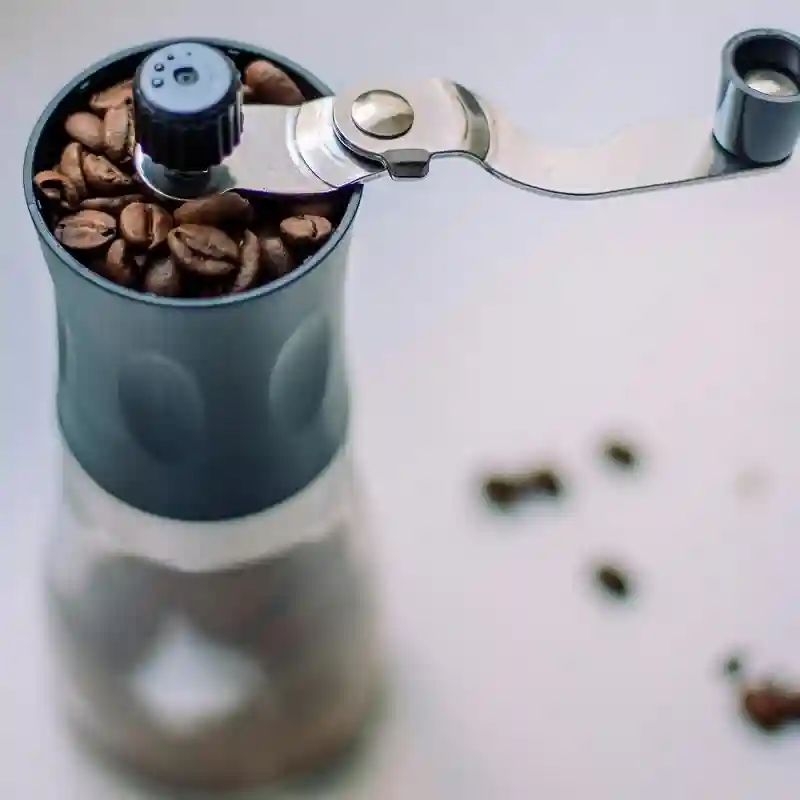
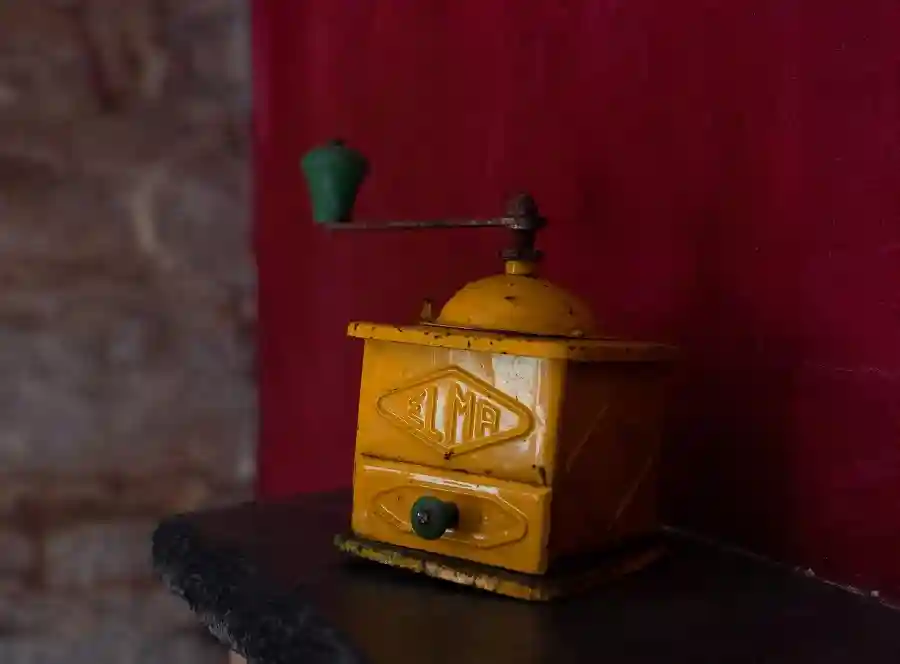
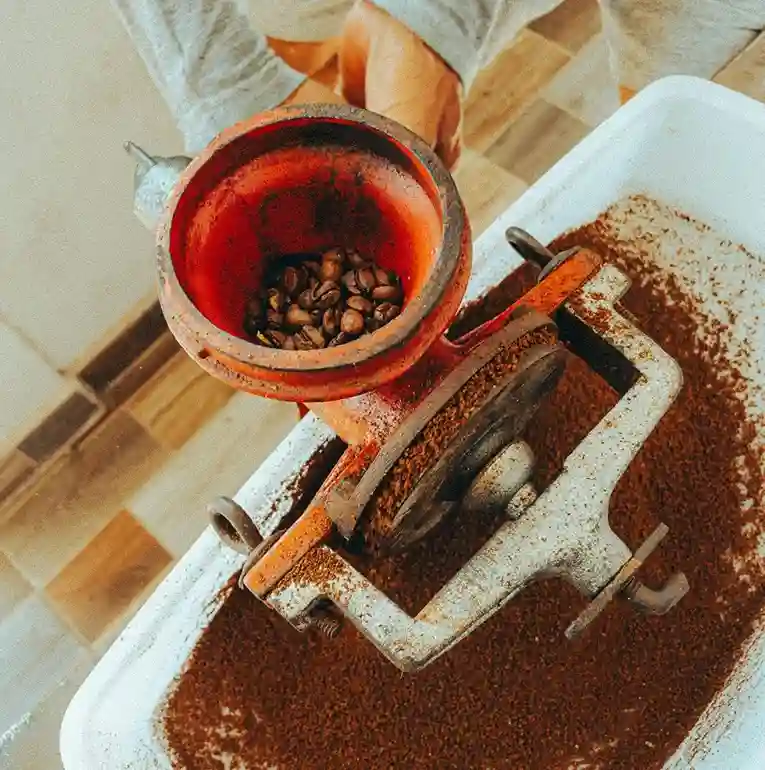
Manual grinders are a classic grinding method that has been around for centuries. They provide maximum control over the process, allowing you to precisely adjust the size of the particles.
Modern models are compact, lightweight, and often made of metal, ceramic, or several materials. They are equipped with adjustable millstones, which allows you to get a grind from very fine to coarse. Some models have mechanisms for easy handle rotation and more stable grinding with small grain volumes.
Advantages of manual grinding:
- Minimal heating of the grains, which preserves the aroma and flavor.
- High control of grinding uniformity, which is especially important for alternative cooking methods.
- Can be used without electricity, making them convenient for traveling or camping.
Who should choose a coffee grinder:
- For those who appreciate the process and want the freshest, most flavorful coffee possible.
- For those who prepare a small number of beverage portions when grinding accuracy is critical.
- For those who prefer Turkish, filter coffee or espresso
- For those who want to experiment with different degrees of grinding.
Disadvantages:
- It requires physical effort and time.
- Not suitable for preparing large volumes of drink.
- Less convenient for quick daily use.
Key criteria for choosing a coffee grinder
Uniformity of grinding
Uniform grinding ensures stable extraction, avoiding thermal damage to the beans or under-extraction. The quality can be assessed visually: the same particle size means better flavor.
Adjusting the degree of grinding
The wide range of settings allows you to adapt the grind to different brewing methods. Fine adjustment is particularly important for espresso and filter coffee.
Engine power
The optimal power is 150-300 W for home models and 400-600 W for semi-professional models. Power determines the speed and efficiency of work without overheating.
Hopper volume
It is important to consider the amount of grain you plan to grind at a time. For a home, 100-250 g is enough, for a cafe – at least 500 g.
Materials and construction
Case materials
The grinder body can be made of plastic, metal, or wood. Plastic is lightweight, inexpensive and easy to transport, but less resistant to mechanical damage. Metal provides strength and durability, withstands intensive use, and wood has a cozy aesthetic appearance. Combined materials combine practicality and design.
Materials of millstones and knives
The grinders and cutting elements of a coffee grinder have a major impact on the quality of the grind, so the material used is crucial. Steel is characterized by high strength and high rotational speed, which makes it optimal for processing large volumes of beans. However, with intensive use, steel can heat up the beans, which slightly changes their flavor. Ceramics are more durable, less prone to overheating, and preserve the natural flavor and aroma of the grain. It provides a more even grind, which is especially important for alternative brewing methods where the precision of the particles is critical for uniformity of extraction.
Container for ground coffee
Antistatic containers prevent powder from sticking to the walls, simplify dosing and cleaning, and transparent models allow you to control the remaining grind.
Special functions and additional features
Grinding dosage
Automatic shut-off or portioned dosing allows you to precisely control the amount of ground coffee, avoid overconsumption of beans and keep each serving fresh.
Protection against overheating
The cooling system prevents the grinders from overheating, preserves the aroma and flavor of the coffee beans, extends the service life of the device and ensures a consistent grind.
Noise level
Quiet models and soundproofing make the grinding process comfortable at any time of the day, which is especially valuable for family use at home.
How to choose a grinder for your brewing method
For the Turk
The finest grind is required to produce a thick and rich drink with a rich aroma characteristic of traditional Turkish coffee.
For espresso machines
The medium-fine grind must be stable and homogeneous, which is critical for uniform extraction and rich creamy foam.
For filter coffee
Medium even grind guarantees a clean, balanced flavor. It allows you to feel all the aromatic nuances of coffee without bitterness.
For French press and cold press
Coarse grinding promotes long extraction, avoids excessive bitterness and produces mild, rich and flavorful coffee.

Coffee grinders for home versus professional models
Home
A home coffee grinder is chosen to prepare small portions of kava on a daily basis. Such models should be compact, convenient and easy to use, with an optimal price-quality ratio.
Semi-professional
They have increased performance and advanced settings that allow you to brew coffee quickly and accurately. Suitable for active use at home or in small offices.
Professional
Provide maximum grinding accuracy, high durability and the ability to withstand intensive daily use, making them indispensable for coffee shops and establishments with a high flow of customers.
Practical operating tips
How to use the coffee grinder
Before using the coffee grinder, prepare it: check the cleanliness of the grinders or blades, add the required amount of beans, and set the desired grind level. Following the manufacturer’s instructions and safety precautions prevents damage to the equipment and ensures consistent brewing results.
Maintenance and cleaning
Regular cleaning of coffee oils and grinding residues reduces the risk of unpleasant odors and maintains the taste of the drink. The grinders and knives should be periodically checked for wear and tear and replaced if necessary to extend the life of the machine.
Common user mistakes
Typical mistakes include overloading the hopper, using wet beans, and excessive pressure on the handle in manual models. Adherence to the correct operating mode and regular maintenance helps to avoid damage to the grinder and maintain the quality of the grind.
Budget and brand recommendations
Entry level (up to 2000 UAH)
Basic models for beginners. They are compact, easy to use, and have minimal grind settings. They are ideal for those who brew coffee infrequently, do not require high precision, but want to enjoy flavorful coffee at an affordable price.
Middle segment (2000-8000 UAH)
The optimal balance of price and quality. These models provide a stable and even grind and have advanced settings. A coffee grinder in this segment is worth choosing for active home use, small offices, or those who appreciate more precise extraction and deeper coffee flavor.
Premium (from 8000 UAH)
High-quality premium models are designed for home or professional use. They are characterized by maximum grinding accuracy, high durability and reliability. This level of coffee grinder is chosen by the most demanding connoisseurs to make high quality coffee every morning.
Frequently asked questions
How many beans to grind at a time: depends on the hopper volume and the desired number of cups, usually 1-2 servings are ground.
How to store ground coffee: in an airtight container, away from light, moisture and heat sources.
When to replace the grinder: Replace the grinder or its grinders when uneven grinds prevent you from achieving the desired taste.
Can I grind spices: It is advisable to use a separate device so that the remaining spices do not affect the taste of the coffee.
Conclusions and final recommendations
Choosing the right coffee grinder means taking into account your needs, brewing method, and budget. Adjustable grinders are best for home use, knife or manual grinders for Turkish coffee, and high-precision grinders for espresso. Choose the material and power, pay attention to the grinding accuracy and special features of the device.
Remember: a coffee grinder is an investment in the consistent quality of your favorite drink.