Coffee is one of the most influential cultural and commercial plants on the planet. Every day, more than two billion cups of this drink are consumed around the world: in the family kitchen, in a coffee shop, in a restaurant, in an office.
For some it is a morning ritual, for others it is a reason to meet, a scent of inspiration or even a source of creative energy.
The history of coffee in Ukraine began in the 18th century in Lviv, where the drink was introduced by Austrian and Armenian merchants. It was there that the first coffee shops appeared and quickly became centers of urban life. Later, the coffee culture spread to Kyiv, Odesa, and Kharkiv and became part of Ukrainian identity. Today, Ukrainians have the opportunity to buy coffee in modern roasters that compete in international championships on a par with the world’s industry leaders.
It is a cultural code and an important element of the global economy that unites millions of farmers, roasters and consumers.

History and origin
According to legend, an Ethiopian shepherd noticed that his goats were unusually frisky when eating red berries from an unknown bush. He shared his observations with local monks, who became interested in the plant and subsequently began to brew an infusion of these fruits. This is how coffee began its journey around the world. From Ethiopia, it made its way to Yemen, where Sufis drank the drink during night prayers, and then to the Ottoman Empire, Europe, and traveled further around the world.
In the 17th century, coffee became a symbol of intellectual debate and the reason for the birth of coffee houses. They became centers of social life where people exchanged opinions, news, and ideas.
Today, coffee is the second largest commodity in international trade after oil.
The coffee tree as a plant
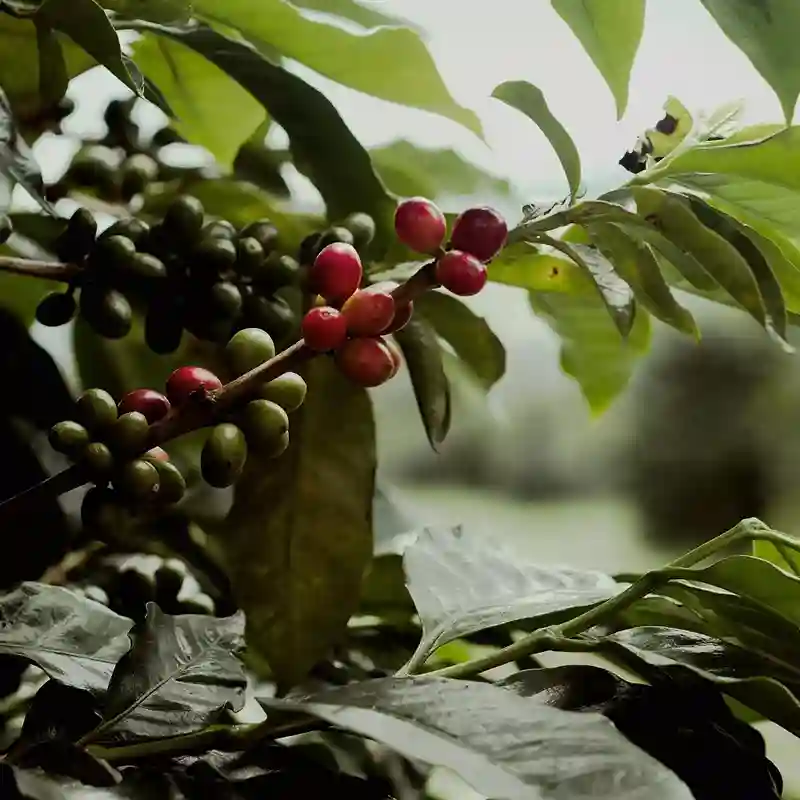
The coffee tree is an evergreen tropical plant of the genus Coffea, which belongs to the Marena family, with shiny dark green leaves and white fragrant flowers similar to jasmine.
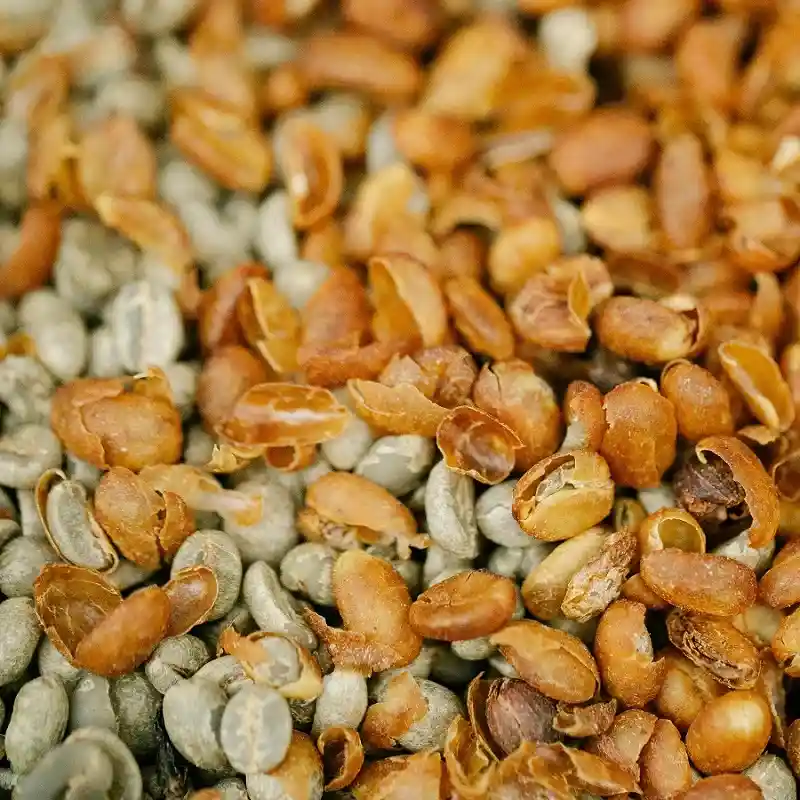
The fruit of the tree is a berry with two green grains inside. At first they are green in color, and when ripe, they turn red or purple, which is why they are often called “cherries”. Inside the berry is a sweetish pulp and a thin shell that protects the coffee beans.
Coffee grows only in a narrow geographical area between 25°N and 25°S latitude, the so-called “coffee belt”. It is here that the climate conditions – warmth, humidity and fertile soils – are ideal for growing coffee trees. Brazil, Ethiopia, Colombia, and Vietnam are the most famous coffee-growing regions. These countries supply most of the world’s coffee.
The main types of coffee trees
The most common types of coffee trees are Arabica, Robusta, and Liberica.
Arabica accounts for about 70% of global production and is characterized by a complex aroma and pleasant acidity. This coffee tree is demanding in terms of growing conditions, but it is the most exquisite varieties that are valued for their depth of flavor, mildness and rich aroma bouquet.
Robusta is more stable. This type of coffee tree produces beans that contain twice as much caffeine, have a denser body and taste with more bitterness, and are often used in espresso blends to add strength and creamy foam.
Liberica has large berries and a woody, exotic flavor, but is rarely grown on an industrial scale, as it is inferior to Arabica and Robusta in terms of popularity and yield stability.
Where coffee is grown
Coffee is grown in more than 60 countries around the world, located along the “coffee belt” – from Latin America to Africa and Asia. Each region has its own character and flavor characteristics of the beans:
– Africa (Ethiopia, Kenya, Rwanda) – bright acidity, floral and berry notes.
– South America (Brazil, Colombia, Peru) – a balanced flavor with nutty and chocolate hints.
– Asia (Indonesia, India, Vietnam) – dense body, earthiness and spicy notes.
The unique profile of coffee beans depends on where they grow, so the country where they are grown often becomes a kind of brand.

Optimal conditions for growing coffee
Coffee grows best at temperatures of 18-25 °C and regular rainfall. An important factor is the altitude: the higher the altitude, the slower the berry ripens and the more complex, richer the flavor. The best soils for growing coffee are volcanic soils, well-drained and rich in minerals and organic matter. Before planting, farmers carefully prepare the soil, adjust the pH, fertilize it with natural components, and create conditions for stable moisture and root aeration so that coffee trees take root better and produce a rich, high-quality crop.
The life cycle of coffee trees
It usually takes 3-4 years from planting to the first harvest of a coffee tree. An adult coffee tree can bear fruit for up to twenty years, giving a steady harvest. The flowering of the trees lasts only a few days, after which green berries appear, gradually turning red and ripening within six to nine months. One bush produces from half a kilogram to five kilograms of raw beans each year, and the yield depends on both the variety and the conditions in which the coffee grows.
Propagation and planting methods for growing coffee
Coffee is grown from seeds or cuttings. Seeds are sown in special nurseries where the sprouts grow for up to 6-12 months, after which they are moved to plantations. Some farms use the cuttings method to preserve the characteristics of the mother tree. Planting is carried out at the beginning of the rains, when the soil is moist and young coffee trees take root better.
Caring for coffee trees
Care includes regular watering, fertilizing with organic fertilizers, pruning to form a crown, and pest protection. Particular attention is paid to combating fungal diseases such as coffee leaf rust and weevil. Mechanical methods, traps and natural enemies of insects are used to control pests. Modern farmers are increasingly switching to biological means of protection to reduce the impact of chemicals on the environment and improve grain quality.
From flower to berry
After a short flowering period, green berries are formed, which gradually turn red or yellow, signaling that it is time to harvest. This is done both manually and mechanically, but manual harvesting allows you to select only ripe fruits, ensuring higher quality. Next, the berries go through processing stages (dry, wet, or semi-dry). This stage significantly affects the taste of the future cup.

Plantation cultivation technologies
Modern plantations are increasingly introducing drip irrigation systems, humidity sensors, and shade plantations to preserve the microclimate. On large farms, harvesting is mostly done mechanically, while in the speckled segment, manual labor prevails, allowing for careful selection of only the best berries.
Modern innovations in the industry
Science and technology have a significant impact on the industry. Breeders are creating hybrids that are resistant to disease and climatic fluctuations (for example, Castillo, Ruiru 11). Organic methods of soil cultivation and plant care are being introduced: composting, minimal use of chemicals, and biodiversity conservation. In many countries, farm laboratories are emerging where they experiment with fermentation to enhance certain flavors. Ukrainian roasters work with fermented lots by establishing direct contact with farmers.
Influence of technological conditions in coffee cultivation on its flavor characteristics
Every factor, from soil to rainfall, affects the flavor profile.
- The height adds acidity and flavor.
- Temperature determines the density of the grain.
- The soil leaves its mark by adding shades of minerals.
- The processing method determines the main character, from clean and wine to sweet dessert.
For example, Ethiopian Arabica grows at an altitude of over 1800 meters, so it has a light body and bright citrus notes, while Brazilian Arabica grown on lower slopes has a more chocolatey, nutty profile.
Economic aspects of growing coffee
The coffee industry employs more than 25 million farmers worldwide. The price of coffee depends on many factors: yields, labor costs, logistics, and stock market fluctuations. Distributors and roasters often receive the bulk of the profits, while farmers remain the most vulnerable link. That is why direct trade is becoming increasingly popular, when roasters buy coffee beans without intermediaries and ensure fair payment to the producer. In Ukraine, interest in transparent supply chains is also growing. This is a sign of a mature coffee culture.

Growing coffee at home
Coffee also grows at home. Not for the harvest, but for pleasure and beauty. It requires fresh beans, a light, acidic substrate, a temperature of about 22-25 °C, and plenty of light without direct sunlight. Seedlings appear in 2-3 months, and the plant begins to bloom in 3-4 years. It’s difficult to get the fruit at home, but watching the tree grow helps to better understand the nature of coffee.
Frequently asked questions and myths about coffee
Myth 1. Coffee can be grown anywhere.
In fact, coffee trees grow in a stable, warm climate where temperatures do not drop below freezing.
Myth 2. Robusta is a “bad” coffee.
High-quality robusta has its own niche, adding strength and creamy texture to espresso.
Myth 3. Light roasting is weaker than dark roasting.
Light has more caffeine and acidity, while dark has more saturation, but not strength. People usually confuse flavor intensity with caffeine content.
Myth 4. Expensive grains are always better.
Expensive coffee is not always better: the taste is more influenced by the freshness of roasting and proper storage.
Conclusions.
Coffee is the result of cooperation between nature and humans. It travels a long way, from the bean to the flavorful drink in the cup. The true flavor is formed not only during roasting or brewing, but primarily due to the growing conditions, farmer’s care and respect for the environment. Understanding this process is creating a new, conscious coffee culture: eco-friendly, honest, and taste-oriented. For Ukraine, where coffee culture is actively developing, this is a chance not just to drink your favorite drink, but to join the global community that respects labor, appreciates taste and harmony with the environment.