What is a manual coffee grinder and how it works
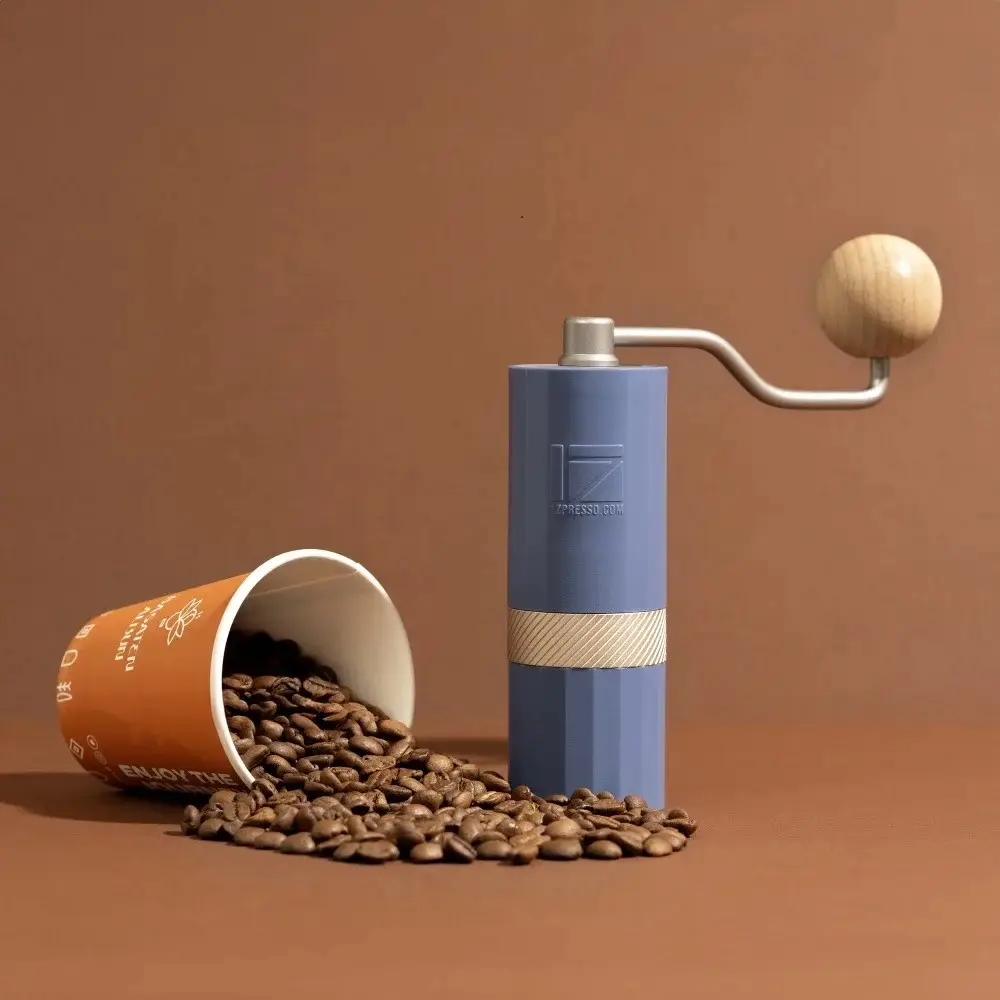
It is a mechanical device for grinding roasted coffee beans that operates without electricity and provides maximum control over the grinding process. It allows you to create a fresh grind just before brewing, so that the coffee retains its aromatic oils, rich flavor, pleasant texture and intense aroma.
How a manual coffee grinder works
The coffee beans are poured into the upper hopper and fall between the fixed and movable grinders. As the lever rotates, the movable grinder grinds the beans to the desired size.
The millstone mechanism ensures even grinding by abrasion, unlike electric knife grinders that grind beans with blade impacts. This method reduces the amount of coffee dust and uneven particles.
Advantages of mechanical grinding over electric grinding
The user can precisely select the desired degree of grinding. Unlike fast electric grinding, which can heat up the beans and reduce the aroma, a manual grinder works delicately, preserving the taste and flavor of the coffee.
It requires no electricity, takes up minimal space, and is ideal for traveling, camping, and office use.
Mechanical models are usually cheaper than their electric counterparts, have a simpler design, and have a longer service life if properly maintained.
When to choose a manual coffee grinder
The manual model is ideal for those who brew 1-2 cups and value quality over speed. It will also be a great solution for alternative brewing methods where uniform grinding is critical.
In addition, a manual grinder is suitable for traveling and in conditions without electricity. It gives beginners a deeper understanding of coffee, as it allows them to experience how changing the grind affects the taste of the drink.
The main types of manual coffee grinders
Manual coffee grinders are divided into several types depending on the design, type of grinders, and purpose.
Coffee grinders with cylindrical millstones
The classic design is time-tested: the millstones are shaped like a cylinder and grind the grain by gradual abrasion. Inexpensive, reliable and easy to maintain.
The disadvantages include imperfect grinding uniformity at fine settings. Such grinders are best suited for medium and coarse grinding, which is used in particular for alternative brewing methods.
Coffee grinders with conical grinders
The conical grinder grinds coffee beans gradually and evenly, with minimal dust.
Such models have a wider range of settings and better grinding. That’s why they’re the choice for both alternative brewing methods and espresso.
Folding and portable models
Compact models are equipped with a removable or folding handle and a small container for the beans. However, comfort and grinding speed are lower compared to stationary models.
Tabletop manual coffee grinders
Stationary models are often attached to a table or have a heavy base for stability. They are equipped with larger grinders and offer high productivity. These grinders are comfortable and durable.
Key criteria for choosing a manual coffee grinder
It is important to pay attention to the characteristics that directly affect the quality of grinding and the ease of use of the device.
Material and quality of millstones
The millstones are responsible for the stability and uniformity of grinding.
Steel grinding plates are characterized by high strength and wear resistance. They are versatile, suitable for different grinding levels and offer an optimal price-performance ratio.
Ceramic grindstones stay sharp longer, provide a cleaner taste and consistent results, but are more fragile.
Titanium coating is a premium segment. It makes the steel strong and wear-resistant, ensuring maximum durability and grinding stability even under heavy use.
Body design and ergonomics
The materials, shape, and ergonomics of the case determine the convenience of daily use,
Traditional wooden coffee grinders look aesthetically pleasing and are pleasant to the touch. The wood partially absorbs vibrations, making the grinding process softer.
Metal housings, usually made of aluminum or stainless steel, are resistant to wear and tear, mechanical damage and are well suited for active use. Metal provides structural stability, which has a positive effect on grinding uniformity.
Plastic cases are lightweight and practical, resistant to moisture, travel-friendly, and inexpensive. However, they are inferior to wood and metal in terms of aesthetics and durability, and they dampen vibrations less well.
The shape and dimensions of the case are tailored to the size of the palm and affect comfort. Rubberized inserts, a textured surface, or special notches prevent slipping and relieve stress on the hand.
Grinding control system
A high-quality manual grinder should cover a wide range of grinding settings: from ultra-fine for Turkish and espresso to coarse for French press.
Step adjustment means several fixed positions that can be switched between.
The infinitely variable adjustment allows you to smoothly change the distance between the grinders and fine-tune the grind. These grinders offer more options.
Technical characteristics
The technical parameters of a manual coffee grinder determine its practicality in everyday use and compliance with the user’s needs.
Capacity of the grain container
It usually ranges from 20-40 grams. The best choice depends on your preferences and the number of cups you need.
Container for finished grinding
It should be easy to pour and clean.
Grinding speed and force
The grinding speed depends on the size and material of the grinders, the settings, the degree of grinding and roasting of the beans. Fine grinding and hard, light beans require more time and effort.
Stability of particle size
The uniformity of grinding directly affects the quality of extraction and is the main feature of a quality grinder. The presence of a large amount of fine dust or large particles leads to an imbalance in flavor.
Choosing a grinder depending on the brewing method
For espresso and coffee machines
Espresso requires a very fine and even grind. Manual grinders with precise, ideally infinitely variable adjustment and high-quality grinders are the best solution.
For filter coffee and pour-overs
Alternative brewing methods require a uniform medium grind.
For French press and Cold Breeze
Coarse grinding ensures the pure infusion characteristic of these brewing methods.
For Turks and oriental coffee
The ultra-fine grind required for oriental coffee can only be guaranteed by a high-quality grinder with high-quality grinding bars and precise adjustment.
Popular brands and models
The market for manual coffee grinders includes both premium and more affordable brands. Among the well-known manufacturers, there are mainly companies that specialize in grinding mechanisms (Hario, Porlex, Timemore, 1Zpresso, Lido). Their models are characterized by well-thought-out ergonomics, consistent grinding quality, and long service life.
Premium segment
Premium manual coffee grinders are characterized by high quality materials, impeccable workmanship and consistent results. The main emphasis is placed on large-diameter grinders made of steel alloys or titanium coating, precise infinitely variable adjustment and perfect alignment of parts.
Middle price segment
The most popular due to the optimal balance between price, grinding quality and ease of use. The adjustment is usually stepwise. It allows you to customize the grind for almost all brewing methods. The body is most often made of metal and plastic, which helps to maintain stability and reduce weight.
Budget options
Usually, these are models with simple steel or ceramic millstones in a plastic body. Such models are easy to use and suitable for coarse and medium grinding. Do not expect a perfectly uniform grind.
Recommendations of Rostec experts
Invest in the grinders, not the appearance. It is they who reveal the flavor potential of coffee. Pay attention to the accuracy of the adjustment if you plan to make espresso.
Care and maintenance
Even the best model requires regular cleaning and periodic maintenance to ensure longevity and high-quality grinding.
Daily cleaning
After each use, it is recommended to remove the ground coffee residue from the container and grinders with a soft brush or a special brush. Wet cleaning is generally not recommended to avoid corrosion of metal parts.
Calibration of millstones
Even high-quality millstones may need to be recalibrated over time. Checking and correcting the settings helps to maintain the grinding accuracy.
Long-term storage
If the grinder is not used for a long time, it should be cleaned thoroughly and stored in a dry place. It is advisable to remove the handle and loosen the grinders to reduce the load on the mechanism.
Signs of wear and replacement of parts
If you notice uneven grinding, use more force during use, or hear strange noises, you may need to replace the grinding jars or other moving parts.
Common mistakes when choosing
The grind does not match the brewing method
Grinds that are too fine for French presses or coarse for espresso result in flavor imbalances and incorrect extraction.
Ignoring the quality of the millstones
The design and price are less important than the quality of the millstones, which determines the stability and uniformity of grinding. Ignoring this aspect can ruin even the most expensive grain.
Choice based on price
Cheap models often have poor alignment of parts, which leads to uneven grinding and rapid wear of parts. Choose the highest quality millstones within your budget.
Neglect of ergonomics
The ergonomic body, smooth lever stroke and stable fixation of parts make work comfortable.
Practical advice from experts
Professionals advise choosing a manual grinder based on both technical parameters and your own habits.
How to test a coffee grinder before buying
Pay attention to the smoothness of the lever’s rotation, stability, and comfort. The mechanism should work smoothly, without jerking or creaking. Try changing the grinding setting. The control should be easy to move to another position.
What to look for in a store
The materials of the body and the quality of assembly are important. Check that the handle is firmly attached, that the grind control works smoothly, and that the containers are securely fastened.
First steps after purchase
After cleaning from production dust, it is recommended to do a few trial grinds to stabilize the mill’s operation. Then you can adjust the settings to your favorite cooking method.
Customization to your needs
Select the optimal grind for each brewing method and see how the flavor of your drink changes. Over time, you will learn how to fine-tune the grinder for your specific beans and your favorite recipe.
Where to buy a coffee grinder in Ukraine
Specialized coffee shops
Here you can get professional advice, test the model and not be afraid of fakes. An additional advantage is service support.
Online platforms
Online platforms offer a wider selection and better prices, but it is important to check the seller’s reputation and the availability of an official warranty.
Warranty service
The availability of warranty or return service is an important indicator of the seller’s reliability.
Frequently asked questions and answers
How much does a good manual coffee grinder cost?
The price depends on many factors. In particular, the quality of the millstones, body materials, adjustment accuracy, and brand.
How long does a quality coffee grinder last?
With proper care, it can serve for more than 10 years. The key to durability is quality and regular cleaning.
Is it possible to grind spices in a coffee grinder
It is not recommended to grind spices, as residues on the grinders can affect the taste of coffee.
How to store your coffee grinder
Store the grinder in a dry place, free of coffee residues, protected from moisture and dust. This will ensure a long service life and consistent grind quality.