Key points
- Giling Basah – a unique method of coffee processing, typical for Sumatra
- The process involves removing parchment at a moisture content of 30-35%.
- Creates a characteristic earthy flavor with low acidity
- Adapted to Indonesian climate conditions
The Wet Hal method of processing coffee in Sumatra has become a real trademark of the Indonesian coffee industry. This traditional method, also known as Giling Basah, produces unique coffee characteristics that cannot be replicated in any other region of the world.
Sumatra, the largest island of Indonesia, has given the coffee world a method that is radically different from standard approaches. Here, coffee acquires the same earthy, rich flavor that specialty coffee lovers around the world appreciate. Indonesian farmers have been perfecting this technique for centuries, adapting it to local climatic conditions.
What makes this method special? First of all, the moment when the parchment is removed. Unlike traditional methods, where coffee beans are dried entirely in parchment, vet hal involves removing it at the high humidity stage. This creates unique conditions for the flavor profile that has become synonymous with Sumatran coffee.
Wet-hal process: features and origin
Wet-hull coffee processing in Sumatra has deep historical roots dating back to the Dutch colonization. The Dutch brought coffee to Indonesia in 1699, when VOC began developing coffee plantations. (VOC – Dutch East India Company (Dutch: Verenigde Oostindische Compagnie) – a Dutch private trading association established to conduct commerce with the East Indies and China).
Initially, farmers used traditional processing methods. By the 1970s, Japanese interest in Sumatran coffee spurred the widespread adoption of the wet-hull process. Constant rains and high humidity (70-90%) made traditional drying virtually impossible.
The Dutch colonists favored the rapid processing method, which offered a faster return on investment. Economic necessity combined with climatic conditions to create a unique method of coffee processing.
What is Wet-Hal coffee processing?
Wet-hull coffee processing is a unique method of processing coffee berries, in which the parchment is removed from the beans at a high moisture level (30-35%). In Indonesian, this process is called “Giling Basah”, which literally translates to “wet grinding”.
Wet-hull coffee processing in Sumatra differs radically from standard approaches in the moment of parchment removal. While traditional wet processing dries the coffee to a moisture content of 10-12% in the parchment, the process interrupts this stage much earlier.
The method is common not only in Sumatra but also on other Indonesian islands, including Sulawesi. However, it is Sumatran coffee processed in this way that has gained the greatest popularity in the world of specialty coffee.
Definition of the vet-hal method
Giling Basah is a traditional Indonesian coffee processing method in which the parchment is removed from the coffee beans at a moisture content of 30-35%, after which the beans are dried to an export moisture content of 10-12%.
What distinguishes vet-hal from other processing methods
The main difference between the vet-hal method and traditional processing methods is that the parchment is removed from the still-wet grains. This creates unique conditions for fermentation and flavor formation.
In wet processing, popular in Colombia, coffee goes through a full fermentation cycle in parchment. The beans are dried to a moisture content of 10-12%, and only then is the parchment removed. This process preserves the coffee’s bright acidity and pure fruit notes.
A natural method common in Ethiopia involves drying whole berries in the sun. Here, fermentation takes place inside the berry, creating sweet, fruity profiles with a high body density.
| Processing method | Humidity during halving | Drying time | Characteristic taste |
| Vet-hal | 30-35% | 7-10 days | Earthy, spicy |
| Wet | 10-12% | 15-20 days | Bright, acidic |
| Natural | 10-12% | 20-30 days | Fruity, sweet |
Removing the parchment at high humidity allows the grains to come into contact with air, which triggers unique biochemical processes. This results in a characteristic earthy flavor with notes of herbs and spices.
The detailed process of veterinary treatment
Wet-hull coffee processing in Sumatra consists of several successive stages, each of which affects the final flavor of the coffee. The process begins with the harvesting of ripe berries and ends with beans ready for export with a moisture content of 10-12%.
Coffee beans undergo a complex transformation within 7-10 days. Unlike traditional methods, where this process can take weeks, vet-hal allows you to quickly get the finished product. This is especially important in the high humidity conditions of Sumatra.
The earthy flavor, low acidity, and dense body are the result of the specific effects of each processing stage on the coffee bean.
The main stages of veterinary treatment
- Picking and depulping berries
- Fermentation (12 – 24 hours)
- Primary drying to 30 – 35% moisture content
- Remove the parchment (key step)
- Final drying up to 10 – 12%
- Sorting and preparation for export
Picking and primary processing of berries
The process begins with the harvesting of ripe red berries on Sumatran plantations. Farmers carefully select the raw materials, as this affects the final result.
Depulping – the removal of the outer skin – takes place within 24 hours of harvest to prevent unwanted fermentation. The hull is removed by mechanical depulping machines or manually. After that, the grains are covered with parchment and mucilage residues.
The quality of depulping affects the subsequent steps. Incomplete removal of the pulp can lead to uncontrolled fermentation and a deterioration in flavor.
Features of fermentation in the vet-hal method
Fermentation in the vet-hal method lasts 12-24 hours and takes place under controlled conditions. This stage is important for shaping the flavor profile of future coffee. The beans, covered with parchment and mucilage residues, are placed in special containers or pools.
Bacteria and natural yeast start the process of decomposition of sugars remaining on the surface of the grains. The fermentation temperature is maintained at 25 – 30°C, which is optimal for the development of the desired microorganisms. Higher temperatures can lead to the formation of undesirable compounds.
The complex aroma compounds that develop during fermentation will later manifest as notes of spices and herbs in the finished coffee. The sugars are converted into organic acids and esters, which form the basis for the future flavor profile.
Controlling fermentation requires experience. Farmers regularly check the beans based on the smell and consistency of the mucilage. Overfermentation can lead to unpleasant, vinegary notes in the finished coffee.
- Initial phase (0 – 6 hours) – activation of natural yeast
- Active fermentation (6 – 18 hours) – decomposition of sugars and formation of acids
- Final phase (18 – 24 hours) – stabilization of the process
Primary drying
After fermentation, the grains are sent to the primary drying stage. This is one of the most difficult stages due to the climatic conditions in Sumatra. The coffee is dried to a moisture content of 30-35%, which is much higher than with traditional methods.
Humidity of 70-90% and frequent rains complicate the process. The sun appears irregularly, often only after short-term showers, which requires a flexible approach to drying.
Farmers use different methods: drying on patios, special beds or under sheds. The grains are stirred regularly to remove moisture evenly. The process takes 2 to 3 days – much less than full drying.
Partial drying avoids the risk of molding that occurs when wet grains are stored in parchment for a long time.
Moisture control is carried out using simple but reliable methods. Experienced farmers can determine the readiness of the grains by touch or by the sound when shaken.
Key step: removing the parchment when it is wet
Removing the parchment at a moisture content of 30-35% is the heart of the vet-hal method. It is this stage that distinguishes processing in Sumatra from all other methods in the world. Parchment is removed from wet grains, which dramatically changes their physical and chemical properties.
For hulling, special machines are used that are adapted to work with wet grains. Traditional equipment can damage soft grains. The process takes place within a few hours of reaching the desired moisture content – a delay can lead to overfermentation.
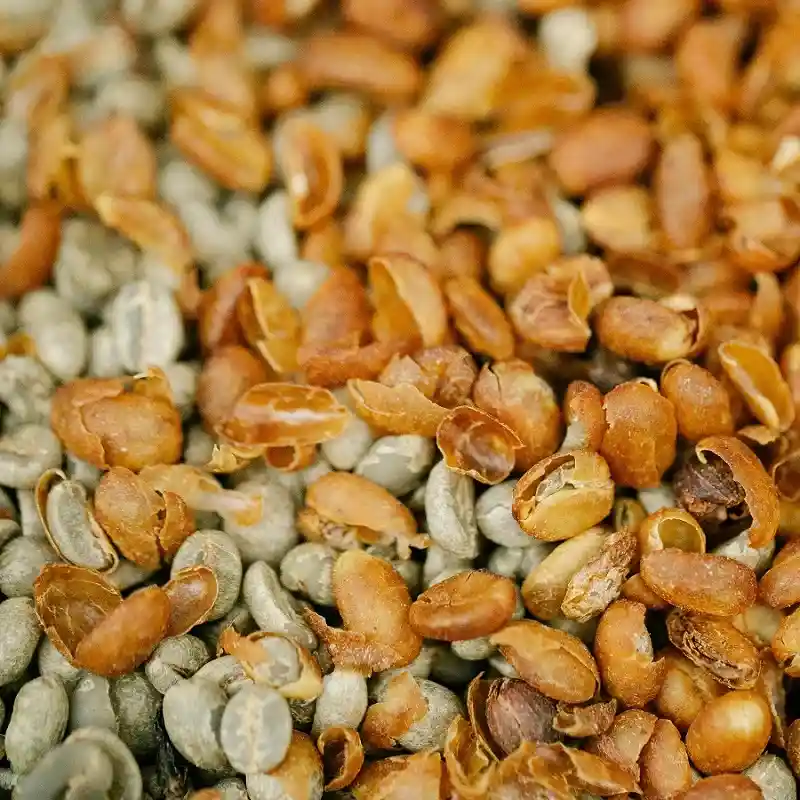
Removing the parchment when it is wet triggers unique oxidative processes. The beans come into contact with air at high humidity, which creates the conditions for the formation of characteristic earthy and herbal notes. After hulling, the beans acquire a greenish-blue hue, the hallmark of Sumatran coffee, the result of specific chemical reactions.
Final drying and storage
After removing the parchment, the coffee needs to be intensively dried to an export moisture content of 10-12%. This stage is much faster, as the beans are no longer protected by the parchment and easily give off moisture.
The grains are spread out in a thin layer on patios or special nets, ensuring maximum contact with the air. Regular stirring prevents uneven drying and the formation of defects.
Final drying in Sumatra is often complicated by sudden rains. Farmers must react quickly by covering the coffee or moving it under sheds. This requires constant attention and a willingness to act quickly.
It takes 3-5 days of intensive drying to reach its full maturity. The finished beans have the characteristic greenish-blue color and density typical of Sumatran coffee. They are sorted by size and quality before being packaged.
Storage of finished coffee requires humidity and temperature control. The beans are packed in 60 kg jute bags and stored in dry, well-ventilated areas until they are shipped to exporters.
Why Sumatra as a destination for vet hal?
Wet-hull coffee processing in Sumatra is the result of adaptation to the unique climatic conditions of Indonesia. Sumatra has a tropical climate with high humidity (70-90%) and intense precipitation, which makes traditional drying methods virtually impossible.
Traditional processing requires long drying, which in Sumatra leads to crop damage. Farmers have found an alternative – a quick method that has become a hallmark of the region. Volcanic soils, a specific climate and traditional processing create coffee with a unique character.
Climate factors in Indonesia
The climate is shaped by monsoon winds and equatorial location. The rainy season (October-April) brings up to 400 mm of precipitation per month with 90% humidity. Southwest Sumatra receives 3000-4000 mm of precipitation per year.
The sun appears irregularly after short-term showers. Long-term storage of wet grains leads to mold. The average temperature of 25-30°C with high humidity creates ideal conditions for microorganisms.
The main harvest (October-March) coincides with the most intense rains, forcing farmers to use fast processing methods.
Social and economic benefits for farmers
Processing coffee in Sumatra using the vet-hal method provides important economic benefits to smallholder farmers. The speed of processing means a quick turnover of funds – farmers receive payment on the second day after harvesting, which helps cover their operating costs.
Traditional methods take weeks or months to complete. For small farmers who live from harvest to harvest, this delay means financial hardship. Vet-hal gives a finished product in 7-10 days.
Farmers sell the wet parchment to harvesters, receiving quick payment and avoiding additional labor. The method also reduces the risk of crop loss – in Sumatra’s humid climate, quick processing minimizes mold growth.
The unique flavor profile ensures stable demand on the international market and predictable income for farmers.
Impact on the flavor profile
Wet-hull processing of Sumatran coffee creates a unique flavor profile that cannot be reproduced in any other way. Earthy, herbal notes with low acidity and a dense body make Sumatran coffee recognizable among industry professionals.
The specificity of the flavor is formed at the stage of removing the parchment when it is wet. When the grains come into contact with air at high humidity, oxidative processes are triggered, creating unique flavor compounds. The result is notes associated with spices, earth and forest herbs.
Low acidity is another characteristic of wet-halved coffee. Unlike the bright, fruity profiles of Central American coffees, Sumatran coffee has a mild, rounded flavor without harsh acidic notes. This makes it attractive to consumers who do not like acidic coffee.
The dense body and long aftertaste are the result of specific changes in the grain structure during processing. Removing the parchment while it is still wet affects the cellular structure of the grain, creating the conditions for a rich, full flavor.

Characteristic flavor notes of coffee processed by the Wet Hal method
- Earthy and herbal notes
- Low acidity
- Dense, full body
- Notes of dark chocolate and nuts
- Long, rich aftertaste
- Spicy shades
Characteristic flavor notes of Sumatran coffee
Sumatran coffee has a complex, multi-layered flavor profile. The earthy notes of moist soil or forest floor dominate, unique characteristics that are shaped by the special processing conditions.
Spice notes add importance to the profile: cardamom, black pepper, sometimes cinnamon. Chocolate notes of dark chocolate or cocoa are revealed in medium to dark roasts. Herbal shades range from fresh green herbs to dried plants, tobacco or cedar.
Acidity remains minimal, a key characteristic of Sumatran coffee. Instead of the bright fruity acidity of African coffees, a soft, rounded structure dominates here.
The body is dense and syrupy – the result of changes in the cellular structure of the grain during wet-halting. The drink creates a feeling of fullness and leaves a long aftertaste.
Recommendations for working with vet-hal coffee
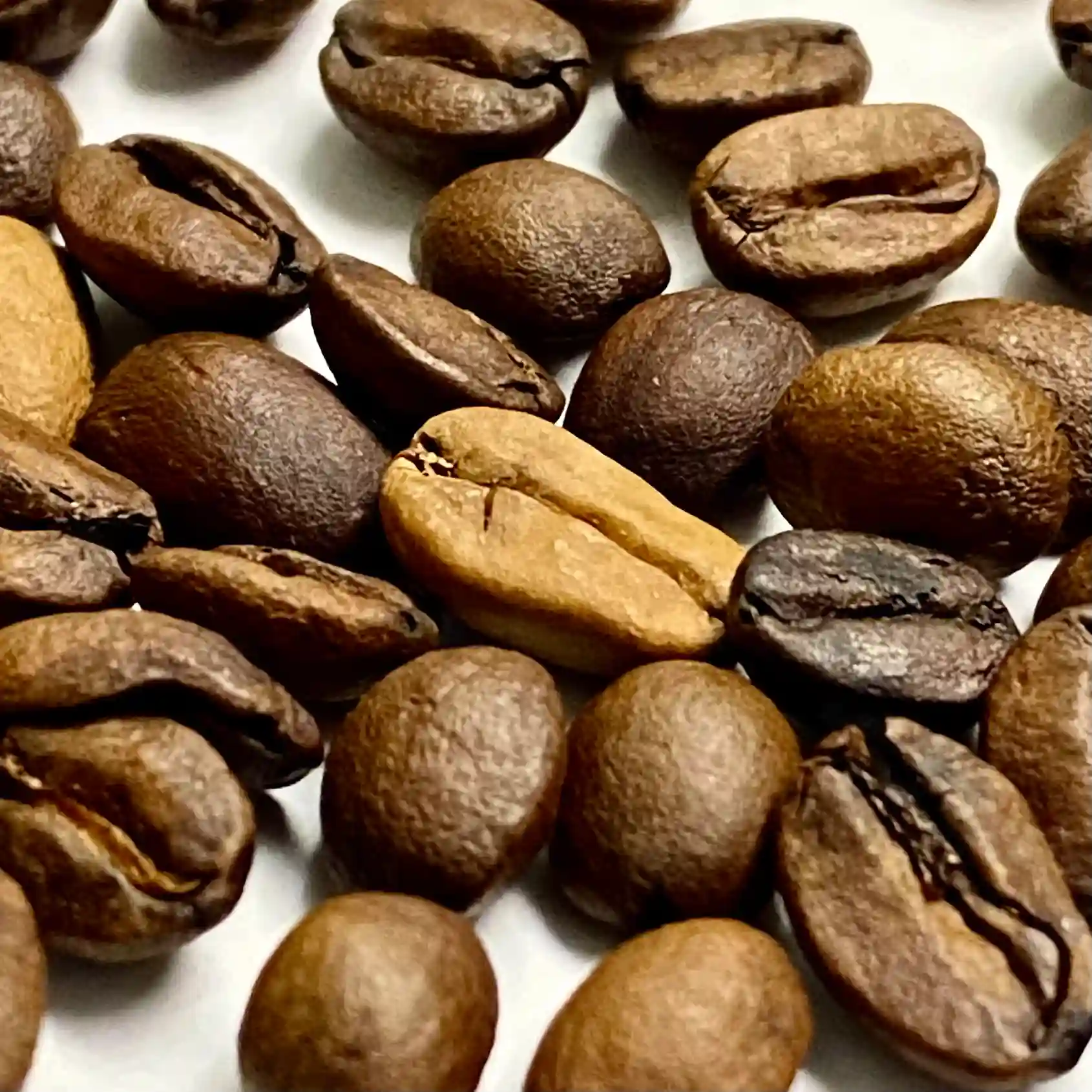
Processing coffee in Sumatra using the Wet Hal method requires a special approach to roasting. The beans have a dense structure and high moisture content, so a slow start with a gradual increase in temperature is recommended.
The best flavor development occurs with medium to dark roasting (Medium to Full City). Light roasting leaves the earthy notes too dominant, not allowing the chocolate and spice flavors to develop.
The temperature of the first cracker should be reached slowly, over 12-14 minutes for even heating. After the first crack, continue frying for another 1-2 minutes to fully develop the flavor.
In espresso blends, Sumatran coffee creates a stable base due to its dense body and low acidity. We recommend 20-30% in the blend to add depth without dominating the earthy notes.
For alternative methods, French press, slow extraction pourover or Cold Brew are the best options – they fully reveal the complexity of the profile and the dense body of the coffee.
Optimal roasting parameters
- Loading temperature: 180-190°C
- Time for the first crack: 12-14 minutes
- Development after crack: 1-2 minutes
- Final temperature: 215-225°C
- Degree of roasting: Medium to Full City
How to choose and prepare coffee processed by the Wet Hal method
When choosing a Wet Hal coffee, pay attention to the region of origin and the date of roasting. The best samples come from the Lintong, Mandeling or Gayo regions of Sumatra. Optimal flavor development occurs 3-7 days after roasting.
Quality Sumatran coffee has a uniform dark green color with a bluish tint. The beans should be uniform in size, without visible defects.
For espresso: medium-fine grind, 1:2 ratio (18 g per 36 g of beverage), extraction for 25-30 seconds. Creates a dense crema with minimal acidity.
French press: coarse grind, 1:15 ratio, brewing for 4 minutes. Allows the oils to get into the cup, emphasizing the dense body.
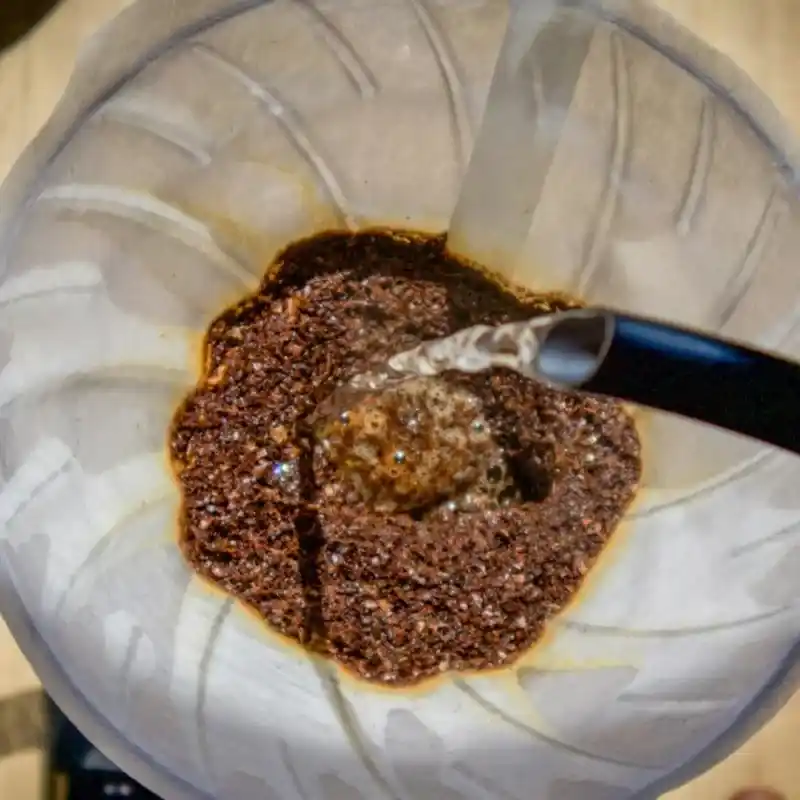
Purover: medium grind, temperature 90-93°C, ratio 1:16. Slow extraction with a 30-second “bloom” reveals the complexity of the profile.
Key points: freshness of roasting, hermetically sealed storage, grinding just before brewing.
Conclusion
Sumatra’s wet-hull coffee processing occupies a unique niche in the modern coffee industry. When specialty coffees tend to have bright, fruity profiles, Sumatran coffee offers an alternative – an earthy, full-bodied flavor for those looking for something special.
The growing interest in the origin of coffee works in favor of the vet-hal method. This processing method tells a story about adaptation to climate, generations of farmers and the uniqueness of the Sumatra region.
Consumers are becoming more educated and willing to experiment with different types of coffee. Sumatran coffee fits perfectly into this trend, preserving the biodiversity of flavors in the coffee world.
The future of the method looks stable thanks to the economic benefits for farmers and steady consumer demand. The preservation of traditional methods such as vet-hal is important to the coffee industry – they represent centuries of experience that cannot be replaced by modern technology.