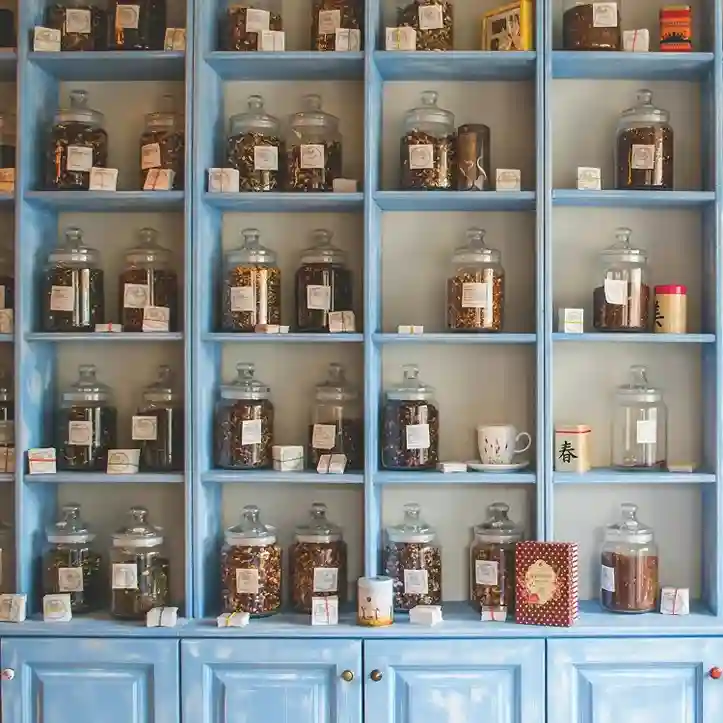
Introduction: why proper tea storage is so important
Tea is a natural product that requires special conditions to preserve its properties. Improper storage will quickly spoil even the highest quality loose leaf tea.
Tea leaves react to changes in the environment. Upon contact with air, aromatic compounds evaporate. Temperature fluctuations change the chemical composition, and humidity creates conditions for microorganisms.
Quality depends on compliance with the rules. The sun accelerates oxidation. The leaves absorb moisture and odors, which changes the flavor.
When stored in airtight containers in a cool place, tea retains its properties longer. The temperature of 4-27°C and humidity of 8-10% are optimal.
Universal principles of tea storage
Five basic principles apply to all types of tea. These rules are based on research from leading tea regions.
The temperature of 2-20°C is optimal. Humidity should not exceed 60%. Protection against odors is critical. Use airtight containers. Minimize exposure to light.
Low temperature – Low humidity – No foreign odors – Proper container – Minimal light
- Temperature: 2-10°C or a stable room temperature of 20°C
- Humidity: maximum 60%; for puerh 60-70%
- Odor protection: airtightness prevents oxidation
- Containers: glass, ceramic, metal
- Light: storage in the dark
For white and green teas, -16°C in a vacuum is recommended.
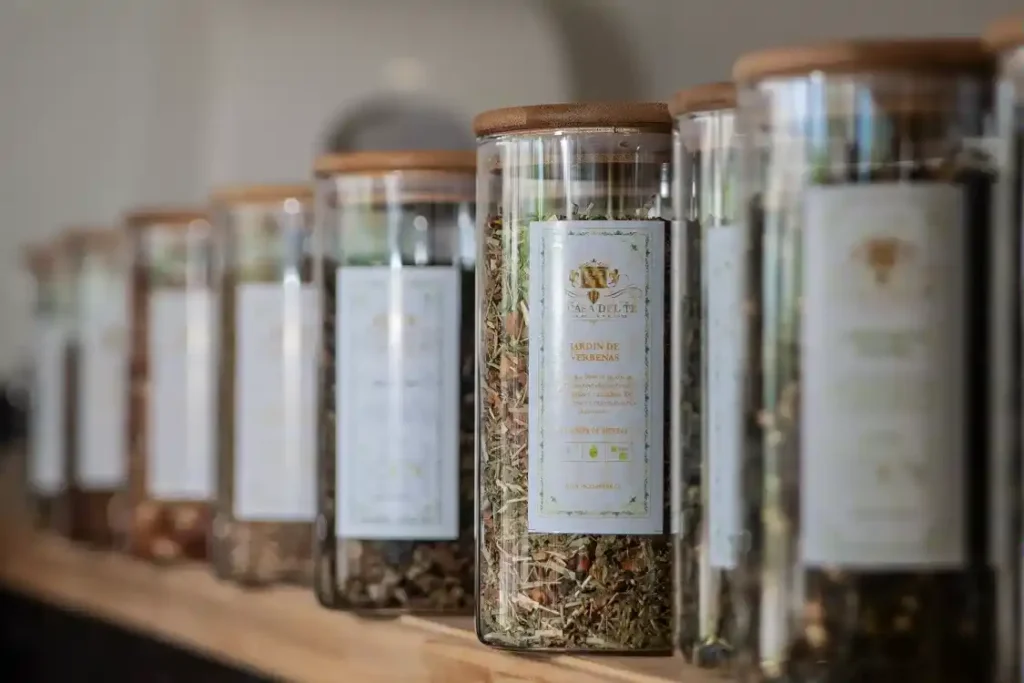
Factors affecting the quality of tea during storage
Oxidation is the main degradation process. Enzymes interact with oxygen to change color and flavor.
The level of oxidation depends on humidity and temperature. The cell sap reacts with oxygen after the leaves are curled.
Essential oils create flavor. They evaporate during leaky storage. Aromatic compounds form the flavor profile of each variety.
UV radiation destroys antioxidants. Humidity above 60% favors microorganisms. Drying at 90-105°C stops oxidation.
Exposure to light, air and moisture
UV rays cause photo-oxidation. Chlorophyll is destroyed and color is lost.
Oxygen changes tannins and catechins. Contact with air leads to loss of flavor.
Negative consequences:
- Loss of aroma in weeks
- Dull color of the infusion
- Bitterness or metallic taste
- Destruction of antioxidants
Humidity over 60% activates enzymes.
Temperature conditions and foreign odors
Room temperature is suitable for stability. The higher the temperature, the faster the loss of flavor.
Recommended temperatures:
- Green/white: -5 to +10°C
- Black: +17-19°C
- Oolong: +15-20°C
- Puerh: +20-30°C
The leaves absorb odors instantly. Spices, coffee, perfume change the flavor forever.
Ideal conditions for storing different types of tea
Different types of tea have unique requirements. Fermentation determines the shelf life.
Black tea is the most stable – it can be stored for 2-4 years. Green tea requires stricter conditions. Oolong occupies an intermediate position. Pu-erh improves over time.
| Type of tea | Temperature. | Humidity | Term. |
| Green | -5 to +10°C | <60% | 6-18 months |
| White | +2 to +15°C | <60% | 2-5 years |
| Black | +17-19°C | <65% | 18 months – 4 years |
| Puer | +20-30°C | 60-85% | 20+ years |
Low-fermented teas (green, white, yellow)
Green tea requires the harshest conditions. It can be stored in the refrigerator for a year – twice as long as at room temperature.
Optimal temperatures:
- Green: -16°C (vacuum) to +10°C
- White: +2 to +15°C
- Yellow: +5 to +12°C
- Light oolongs: -16°C
Do not store loose leaf tea in the refrigerator.
Red (black) teas and pu-erhs
Black tea is the most stable. It can be stored for 18 months to 4 years at room temperature.
Pu-erh is unique – it matures over time. The traditional “wet composition” accounts for less than 2.5% of the market.
Pu-erh storage methods:
- Temperature 25°C
- Humidity 50-60% (shu), 60-70% (shen)
- “Breathable packaging
- Air access
- Separate storage of shu and shen
Airtight containers stop puerh fermentation.
Oolongs (oolongs)
Oolong requires a special approach. Airtightness is important to protect against oxidation.
Light oolongs are stored like green teas. Dark oolongs are stored at room temperature. The optimum temperature is +15-20°C.
The best containers for storing tea
The choice of container determines the success of storage. The container protects against light, air, moisture, and odors.
Requirements for containers:
- Complete tightness
- Inactivity of the material
- Opacity
- Easy to clean
- Mechanical strength
Ceramic and metal containers
Ceramics have natural insulation. It does not react with tea.
| Advantages of ceramics | Disadvantages of ceramics |
| Natural insulation | Fragility |
| Does not affect the taste | Severity |
| Aesthetics | Porosity (unglazed) |
Metal containers are strong and durable. They require an internal coating.
Glass and plastic containers
Glass is the most neutral. It doesn’t absorb odors or change the taste. But transparent glass needs protection from light.
Safe plastics: codes 1, 2, 4, 5. Polypropylene (5) can withstand temperatures up to 130°C.
Special packaging materials
Foil bags provide maximum protection. Zip-locks are suitable for short-term storage.
Paper wrappers for pu-erh provide “breathing”. Bamboo boxes provide natural ventilation.
How to properly store loose leaf tea
Loose leaf tea is sensitive to moisture and odors. Step-by-step procedure:
- Check for dryness (humidity <10%)
- Choose an airtight container
- Fill in 80-90% of the information
- Close hermetically
- Mark the date
The temperature is 15-20°C. Ventilate once a week.
Shelf life of different types of tea
The term depends on the fermentation. Weakly fermented ones are stored the least. Fully fermented ones last longer.
| Type of tea | Shelf life | Features. |
| Green | 6-18 months | Rapid loss of antioxidants |
| White | 2-5 years | Improves with age |
| Black | 18-36 months | The most stable |
| Puer | 20+ years | Improves over time |
How long can tea be stored
Green tea retains its properties for 6-18 months. Black tea – up to 2-4 years.
Signs of expiration:
- Loss of flavor
- Gray color of the leaves
- Softness of the leaves
- Mold
- Metallic flavor
Pu-erhs improve over time. Shen Pu-erhs open up after decades.
Where is the best place to store tea at home
The ideal location provides a temperature of 10-25°C. Humidity should not exceed 60%.
Location requirements:
- The absence of the sun
- Stable temperature
- Low humidity
- Isolation from odors
- Accessibility for control
Ideal storage locations
The best locations:
- Dry, dark cabinet – stable temperature
- Tea shelf – with controlled conditions
- Pantry – at low humidity
- Kitchen cabinet – away from the stove
- Tea box – with compartments
Use a hygrometer to monitor the humidity.
Places to avoid
Not suitable for storage:
- Refrigerator – high humidity, odors
- Near the window – UV radiation
- Temperature fluctuations near the stove
- High humidity near the sink
- Cross-contamination next to spices
- Bathroom – excessive humidity
- Balcony – unstable conditions
Tea absorbs odors in minutes. It is impossible to return the original flavor.
Can tea be stored in the refrigerator
Low temperature slows down oxidation. But high humidity and odors create problems.
Green tea can be stored in the refrigerator for a year – twice as long. The optimum temperature is 0-5°C.
| Advantages. | Disadvantages |
| Slowing down oxidation | Humidity 80-90%. |
| Preservation of antioxidants | Absorption of odors |
| Extension of the term | Condensate |
Vacuum packaging at -16°C stops degradation. Suitable for green and white teas.
Signs of spoiled tea – how to identify
Recognizing spoilage is important for safety. Assess visual, olfactory, and taste characteristics.
Indicators of spoilage: loss of flavor, color change, white coating.
Mei Wei – the smell of mold at a humidity of more than 80%. Sow Wei – the smell of old leather from bacteria.
Visual signs:
- Soft, moist leaves
- Matte black color
- White mold
- Insects or larvae
- Blindness of the leaves
A musty odor and cloudiness of the brew are signs of unsuitability.
Common mistakes when storing tea
The most common mistakes are related to underestimating the tightness. Using the wrong container spoils the product.
Transparent jars allow light to pass through. UV radiation deteriorates the quality over weeks.
The main mistakes:
- Leaky containers
- Storage in damp places
- Proximity to odors
- Temperature fluctuations
- Uncoated metal containers
- Mixing varieties
- Ignoring deadlines
- Lack of labeling
Even small cracks lead to a loss of flavor. Store different types of tea separately.
Tips for storing tea at home
Creating optimal conditions does not require large expenditures. It requires a systematic approach.
Practical recommendations:
- Invest in quality containers
- Create a special zone
- Control temperature/humidity
- Label containers
- Stick to the rotation
- Check the status every month
The size of the container is important. Filling 80-90% minimizes air.
How to brew different types of tea
Proper brewing unlocks the potential of stored tea. Water temperature and time are critical.
| Type of tea | Temperature. | Time | Quantity. |
| Green | 70-80°C | 2-3 min | 1 tsp/200 ml |
| White | 75-85°C | 4-6 min | 1-2 tsp/200 ml |
| Black | 95-100°C | 3-5 min | 1 tsp/200 ml |
| Puer | 95-100°C | 30 sec – 2 min | 1-2 tsp./150 ml |
Soft water of 150-300 mg/l is ideal. Hard water suppresses the flavor.

Frequently asked questions
How to store loose leaf tea?
Store in airtight opaque containers at 15-20°C, humidity up to 60%. Avoid light and odors. Store in a dry, dark place away from spices.
What is the best way to store tea?
The best are sealed containers made of glass, metal, or ceramic. Glass does not absorb odors, metal is durable, and ceramics is naturally insulating. Avoid transparent containers.
Where is the best place to store tea at home?
The ideal place is a dry, dark cupboard with a temperature of 15-20°C. Pantries, closed kitchen cabinets away from the stove are suitable. Avoid the refrigerator and damp places.
What are the basic rules for storing tea?
Five principles: low temperature (15-20°C), humidity less than 60%, no odors, sealed opaque containers, and minimal light. Compliance ensures quality preservation.
How long can tea be stored?
Green – 6-18 months, black – 18-36 months, oolong – 12-24 months, white – 2-5 years, pu-erh – more than 20 years. Terms depend on storage conditions.
Can I store tea in the refrigerator?
Green tea can be stored in sealed packaging for up to a year. But high humidity and odors pose risks. Other types are best stored at room temperature.
How to store different types of tea?
Green/white – sealed at low temperatures. Black – room temperature. Oolongs: light – refrigerator, dark – room temperature. Pu-erh – 20-30°C with access to air.
How do you know if tea has spoiled or lost its properties?
Signs: loss of aroma, musty odor, gray leaves, softness, mold, insects. The brew has cloudiness and an unpleasant aftertaste. Such tea is unsuitable.
What are the common mistakes when storing tea?
Mistakes: transparent or leaky containers, storage in humid places or next to spices, temperature fluctuations, mixing varieties, ignoring expiration dates.
Do I need to transfer tea from the factory packaging to another container?
Yes, if the packaging does not ensure tightness after opening. Paper bags and foil without a zip lock need to be resealed. High-quality metal cans can be left.
Conclusion: tea deserves the best storage conditions
Proper storage combines scientific knowledge with practical experience. The quality of tea depends on compliance with standards.
The aroma is preserved by protecting essential oils from oxygen, light, and moisture. Every detail affects the result.
Investing in proper storage will pay off in terms of quality. Even expensive tea will lose its properties in weeks if stored improperly.
Tea loses its flavor irreversibly when exposed to air. Prevention is more effective than rehabilitation.
Following simple rules ensures maximum enjoyment of tea drinking and preservation of traditions.