Definition of Quakers: characteristics and identification
Quakers are defective coffee beans that remain light after roasting due to insufficient sugars and the inability to undergo normal chemical reactions. These immature beans do not contain enough carbohydrates to trigger the Maillard reaction, a key process that begins at 140-150°C and is responsible for the formation of aromatic compounds and the characteristic brown color.
The Maillard reaction requires interaction between sugars and amino acids. In Quakers, this process does not occur due to the lack of organic compounds. The result? The grains remain pale, often with a yellowish or grayish tint.
In Arabica, quakers are more common due to greater sensitivity to growing conditions. Lipids also do not undergo proper changes during roasting, which further affects the development of flavor.
How to distinguish Quakers from normal grains?
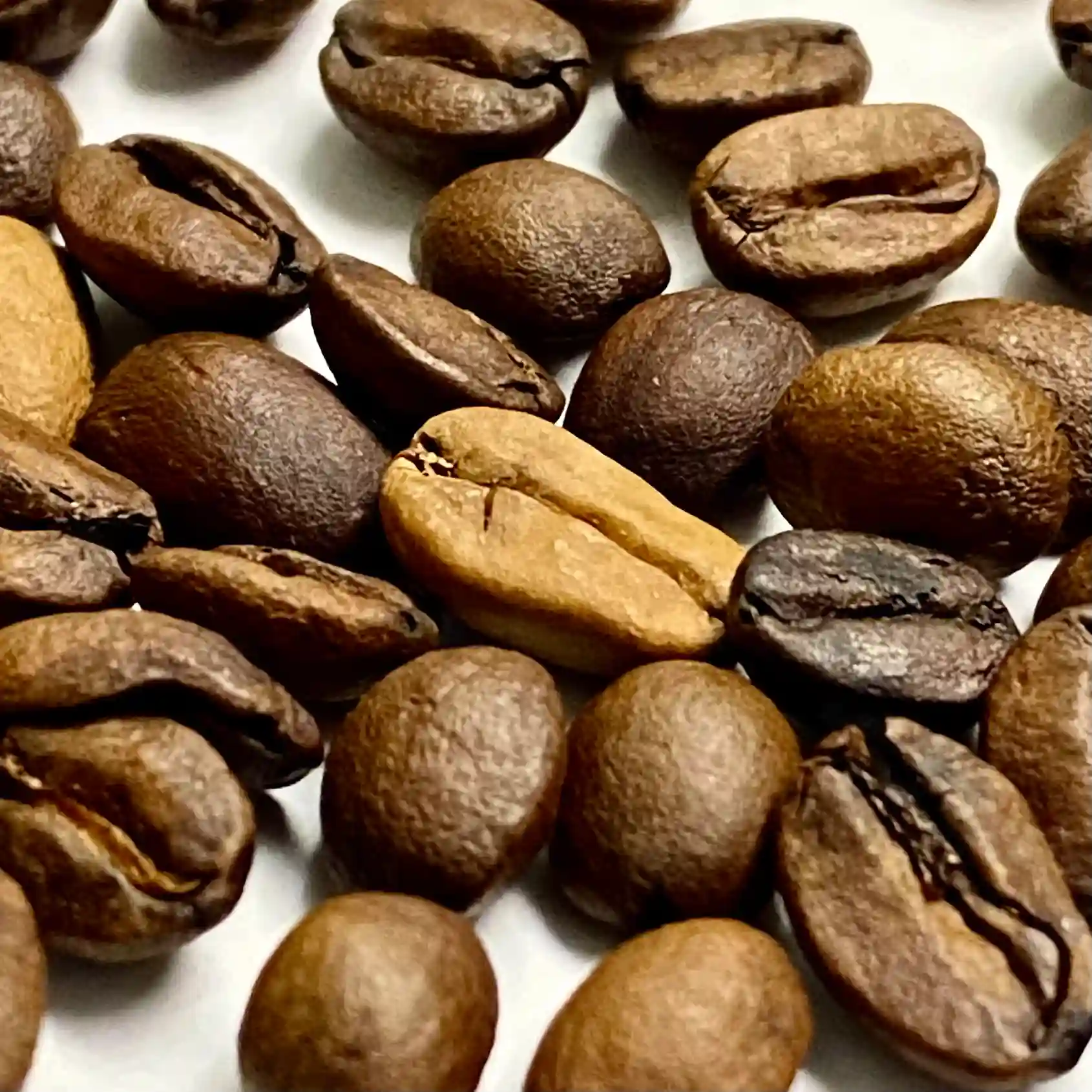
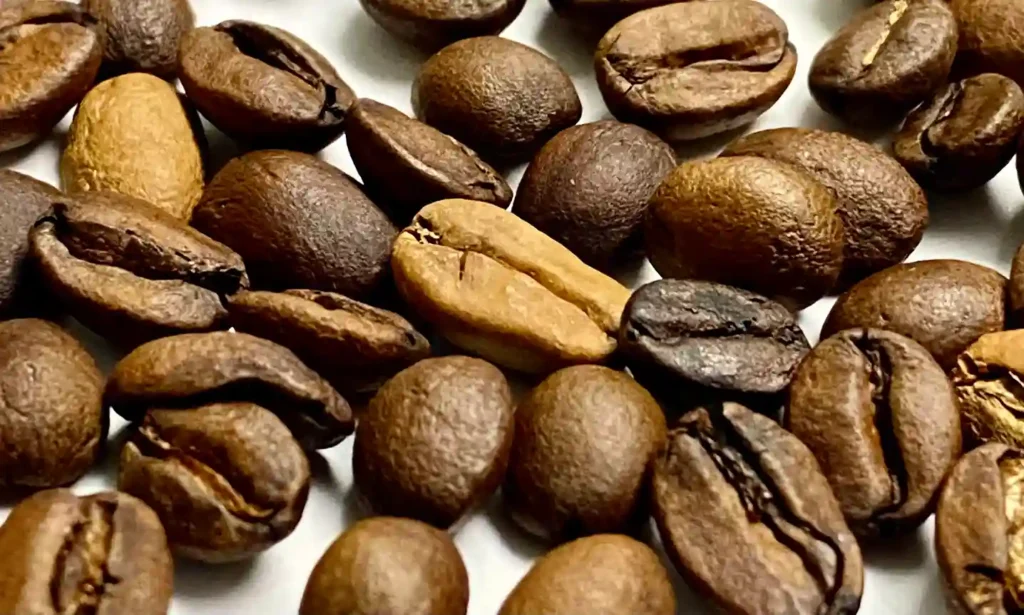
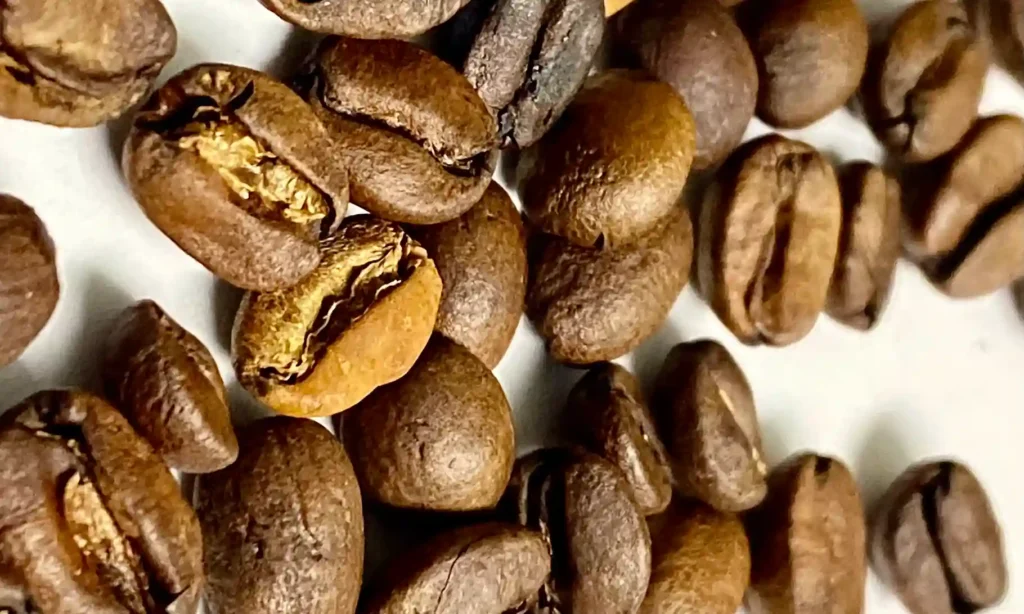
Color is the most obvious sign. Quakers appear much lighter than normally roasted beans. They may have an uneven surface and be smaller in size.
A simple test: scatter the roasted grains on a white surface. Quakers will immediately catch the eye with their contrasting color. They often have a matte texture, in contrast to the glossy surface of well roasted beans.
Organic compounds in normal beans create a characteristic shine after roasting. Quakers do not have this.
What to look for when checking grain for quakers:
- Visual inspection – check the color of the grains before grinding.
- Tactile test – Quakers are often lighter and less dense.
- Size comparison – defective grains are usually smaller.
- Check the surface – look for matte or uneven areas.
Reasons for the appearance of Quakers in coffee
Quakers are formed at different stages of coffee production. From the plantation to the cup. The main reason: the immaturity of the coffee fruit at the time of harvest.
Climate has a significant impact on fruit development. Unstable weather conditions, excessive rain or drought disrupt normal development. Soil with insufficient nutrients cannot provide trees with the necessary elements for full maturation.
In Ethiopia, the birthplace of coffee, farmers face the challenges of high altitude cultivation and seasonal changes. Brazil, the world’s largest coffee producer, faces challenges ranging from mechanized harvesting to large-scale processing.
Fermentation also affects quality. An improperly carried out process can lead to additional defects or incomplete grain development.
Growing and harvesting problems
Coffee trees need balanced conditions for healthy fruit development. The climate must provide stable temperatures and optimal rainfall.
The soil must contain enough nutrients: nitrogen, phosphorus, and potassium. Without these elements, trees cannot fully nourish the fruit. Fertilizers help, but their use requires expertise. Excessive use of fertilizers can even worsen the quality of the grains.
Premature harvesting is a major problem. Farmers sometimes pick unripe berries due to economic pressure or weather conditions. Mechanized harvesting methods do not always distinguish between ripe and unripe fruit.
The tree’s nutrients are unevenly distributed, especially under stressful conditions:
- The soil contains insufficient nutrients.
- The climate is unstable with sharp temperature changes.
- Harvesting is premature due to economic or weather reasons.
- Pests and diseases weaken trees.
- Plantation care is wrong.
Disadvantages during processing and storage
Coffee processing has a critical impact on the number of quakers in the final product. A dry (natural) processing method results in a higher number of quakers, as unripe berries are more difficult to detect visually.
The washed processing method removes defective grains more efficiently through flotation, as unripe berries float in the water. Fermentation during the washed processing also helps to identify problem grains.
Storage in high humidity conditions can lead to additional problems. Improper transportation makes the situation worse.
| Processing method | The Quaker risk | Reason. |
| Dry (natural) | High | Difficult to detect unripe berries |
| Washed (wet) | Low | Flotation removes defective grains |
| Half-washed (honi) | Medium | Partial removal of defects |
Quakers’ influence on the taste of coffee
Quakers radically spoil the flavor profile of the drink. Without the Maillard reaction, the grains do not develop the sweet notes that sugar and carbohydrates provide during caramelization.
Specific flavor defects include peanut flavor, grassy notes, and woody bitterness. Studies show that even 7-10% of quakers in a blend have a noticeable effect on flavor. Flavor compounds that are formed in normal grains are absent in quakers.
Lipids do not undergo proper transformation, which adds a metallic or flat flavor. Caramel, which is normally formed from sugar, does not develop. Instead of sweet caramel, you get bitter wood.
Organic compounds responsible for flavor complexity remain underdeveloped. The result? A watery, bitter drink with an unpleasant aftertaste.
Defective variants of flavor notes of drinks with Quakers:
- Peanut or nutty flavor instead of coffee flavor.
- Grassy and hay notes due to underdeveloped organic compounds.
- Woody bitterness and astringency in the mouth.
- Metallic flavor due to improper lipid processing.
- Reduced sweetness due to the lack of caramelization of sugars.
- Flat, watery flavor without the characteristic coffee richness.
Methods for detecting and removing Quakers
The modern coffee industry uses a variety of approaches to combat quakers. Professional roasters use optical sorting, which is based on color recognition.
Home methods include manually checking the beans before grinding. This is a time-consuming process, but effective for small batches of coffee.
Color remains the most reliable indicator. Modern technologies allow us to automate this process with an accuracy of up to 99%.
Professional sorting technologies
Color sorters are the backbone of modern quality control. These machines use high-resolution CCD cameras with 4096 pixels for accurate color recognition .
Leading equipment manufacturers include Bühler Sortex, TOMRA, Satake. Their machines achieve 97% reduction in the number of quakers with an accuracy of 99.9%.
Artificial intelligence is improving recognition algorithms. New models can detect even minor deviations in color and texture.
At what stages is the grain tested for quakers?
- Primary sorting of green grain after import.
- Pre-sorting before roasting.
- Control after roasting to detect quakers.
- Final check before packing.
- Laboratory quality control of the finished product
What to do with Quakers at home?
Home baristas can significantly improve coffee quality with simple methods. Visually checking the beans before grinding takes a few minutes, but the result is worth the effort.
Scatter the grains on a white surface in good light. The quakers will immediately catch your eye. Remove them with tweezers or simply by hand.
Coffee improves even after removing a small number of defective beans. This is especially important for expensive specialty coffees.
Check your beans before brewing:
- Visual inspection in natural light.
- Sort on a white surface for better contrast.
- Removal with tweezers or hands.
- Check before each brew for consistent quality.
- Keeping records of the quality of different batches of coffee.
How to choose coffee without Quakers
Duty-free processing significantly reduces the likelihood of quakers compared to the natural method. When choosing coffee, pay attention to the information about the processing method on the packaging.
Arabica of higher grades usually contains fewer defects. Specialty coffee undergoes more thorough quality control at all stages.
Reliable roasters invest in sorting technology. Look for information on quality control on the manufacturers’ websites.
Basic recommendations:
- Prefer a washed finish to minimize quakers.
- Choose specialty coffee from certified sources.
- Check the reputation of the roaster and their quality control methods.
- Read the origin and processing information on the packaging.
- Buy small batches to ensure freshness.
- Pay attention to the price (too cheap coffee often contains more defects).
Quality standards and the permissible number of Quakers
International standards clearly regulate the permissible number of Quakers in different categories of coffee. According to SCA standards, a specialty grade (the highest level) should not contain any Quakers.
Premium grade (Grade 2) allows a maximum of 3 quakers per 350 grams of grain. Commercial grade (Grade 3) allows up to 5 quakers.
Arabica usually has stricter standards due to higher consumer expectations. Different countries can set their own export standards.
| Coffee category | Acceptable Quakers | Application. |
| Speshelti Grade | 0 Quakers | Premium segment |
| Premium (Grade 2) | Maximum 3 quakers per 350 g of grain | Quality coffee for coffee shops |
| Commercial (Grade 3) | Up to 5 quakers per 350 g of grain | Mass market |
| Industrial | No restrictions | Instant coffee, blends |
Conclusion
Quaker control is an integral part of producing quality coffee. From farm to cup, each stage affects the final result.
Modern technologies minimize the number of defective grains, but the human factor remains important. Educated consumers are driving the industry to raise standards.
The future lies in the integration of artificial intelligence and machine learning into sorting processes. This will allow for even higher defect detection accuracy.
Quaker-free coffee is not a luxury, but a quality standard that every drinker deserves.
Key findings
- Quakers are defective beans that spoil the taste of coffee due to the lack of normal chemical reactions.
- Washed treatment is more effective in removing quakers than natural treatment.
- Modern sorting technologies reach 99% accuracy in detecting defects.
- Specialty coffee should not contain any Quaker according to international standards.
- Home baristas can improve coffee quality with a simple visual check.
Frequently asked questions
Why are there Quakers in the grain? Quakers are caused by premature harvesting of unripe coffee berries, lack of nutrients in the soil, unfavorable weather conditions, pests, or improper post-harvest handling. The main reason is the immaturity of the fruit.
How do Quakers affect the taste of coffee? Quakers add an unpleasant peanut, grassy, or woody flavor. They reduce sweetness, create bitterness and astringency. Even 7-10% of quakers significantly spoil the flavor profile of the drink.
How to detect and remove Quakers? Visually: look for light, pale yellow grains among the darker roasted ones. Remove manually with tweezers. Professional roasters use color sorters with 99% accuracy to automatically detect and remove defective beans.
What percentage of Quakers is acceptable in high-quality coffee? Specialty coffee (the highest grade) must not contain any quakers. Premium grade allows a maximum of 3 quakers per 350 grams. Commercial grade – up to 5 Quakers. If there are 7-10% of quakers in the total weight, it can significantly affect the taste. Therefore, you need to make sure that there are no more than 7% of quakers.
Is there any way to make sure there are no Quakers in the coffee? It is impossible to guarantee the absence of quakers, but you can minimize the risk. Choose washed specialty coffees from reliable producers. Check the beans visually before brewing.
How to recognize Quakers visually? Quaker grains are light, pale yellow or gray in color in contrast to the dark brown of normal grains. They are often smaller, with a matte surface and uneven texture. The contrast is especially noticeable in good light.
How are Quakers formed? Quakers are formed when coffee berries are harvested immature. Lack of nutrients, unfavorable weather conditions, pests or diseases prevent the beans from fully developing. Improper handling can also contribute to the formation of quakers.