Types of coffee machines for home
The modern market offers five main types of coffee machines for home use. Automatic models provide maximum comfort. Just press a button and your favorite coffee is ready. The drip coffee machines give you full control over the brewing process, which is especially appreciated by true espresso connoisseurs.
Capsule systems, such as Nespresso, guarantee speed and consistency of taste. Drip coffee makers are ideal for making large portions of filter coffee. And what about geyser models? They combine tradition with ease of use.
Professional coffee machines are more powerful and durable than household ones, but also come at a higher price. The De’Longhi and Saeco brands offer models for different needs, from budget to premium. Each type has a different effect on the taste of coffee, so the choice depends on your preferences and experience.
Automatic coffee machines: comfort and versatility
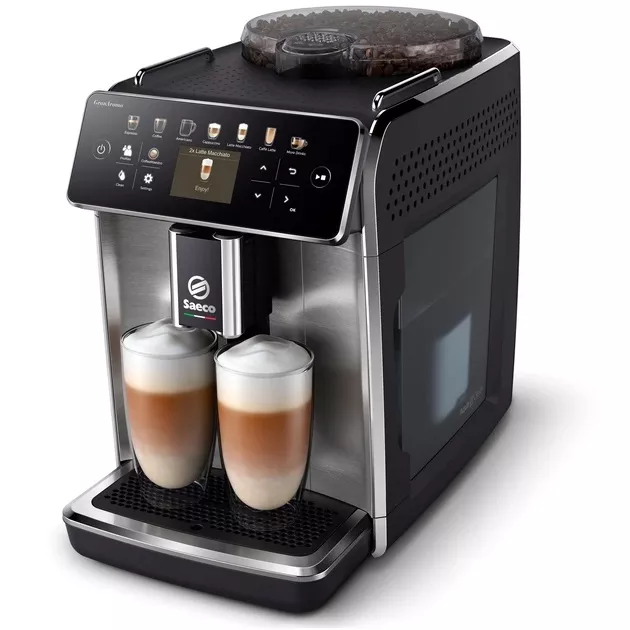
Automatic coffee machines have become a real help for those who value convenience without compromising on quality. The built-in grinder grinds the beans just before brewing, preserving all the flavors. Fill in the beans, add water, and the machine will do the rest.
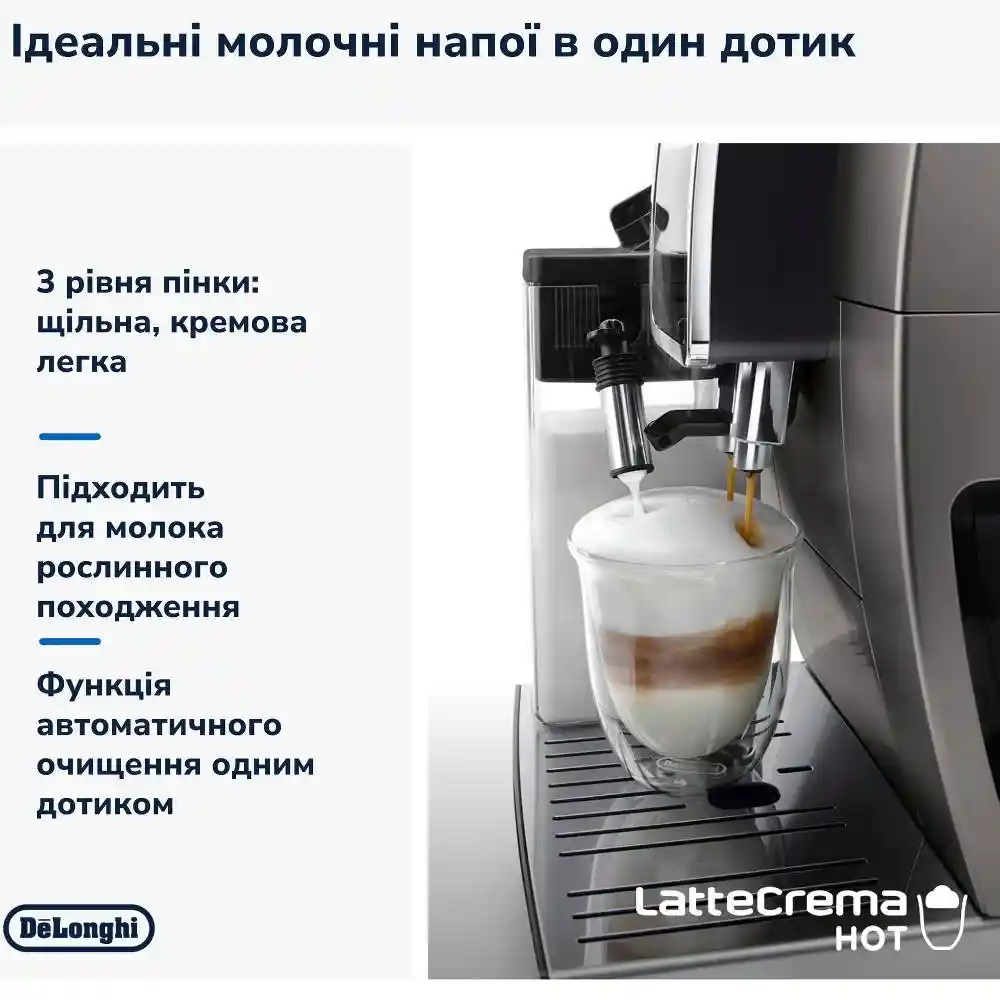
Most models are equipped with a cappuccino machine for preparing milk drinks. De’Longhi is particularly well known for the reliability of its automatic systems. Saeco is known for its innovative technology. These machines allow you to customize coffee strength, temperature, and serving volume.
The main disadvantage? Higher price compared to other types. Also, the brewing unit requires regular maintenance. But for daily use, an automatic coffee machine remains the ideal choice.
Horn coffee machines: for true coffee connoisseurs
Cone coffee machines give you maximum control over the espresso brewing process. You adjust the grind, dosage, and force of the coffee in the cone yourself. This allows you to achieve the perfect taste, but requires some skill.
The quality of espresso depends on many factors: the freshness of the beans, proper grinding, and water temperature. Experienced users can make a drink that is as good as a professional one. Such machines are usually smaller and cheaper than automatic machines.
The main disadvantage is that it takes time to master the technique. Each cup requires attention and effort. But for those who love the ritual of making coffee and strive for perfection, a cone coffee machine will be a real find.
Capsule coffee machines: speed and convenience
Capsule systems are ideal for those who value speed and stability. Insert the capsule, press the button, and in 30 seconds you have a cup of coffee ready. Nespresso remains the leader in this segment, offering a wide range of flavors.
Each capsule contains a precisely measured portion of ground coffee, which guarantees the same result. No need to worry about grinding or dosing. The machines are compact and require minimal maintenance.
Disadvantages include the higher cost of coffee per cup and a limited selection of flavors. There are also environmental issues due to the disposable capsules, although many manufacturers offer recycling programs. For the office or a quick morning coffee, a capsule system is indispensable.
Key criteria for choosing the perfect coffee machine
Choosing a coffee machine is a balance between your needs, experience and budget. The main criteria include power (1200-1500 watts), pump pressure (9-19 bar), water tank volume (1.2-2.5 liters), type of grinder, and whether the machine has a cappuccino maker.
Power affects the heating rate and temperature stability. Pressure determines the quality of the espresso extraction. Tank volume is important for large families. De’Longhi and Saeco offer different combinations of these characteristics.
Additional features, such as strength programming, automatic cleaning, or smartphone connectivity, make it easier to use. But remember: it’s the quality of the basic functions that matters most, not the number of additional features.
| Criterion. | Automatic | Horny | Capsule |
| Power | 1200-1500 W | 1000-1200 W | 800-1200 W |
| Pressure | 15-19 bar | 9-15 bar | 15-19 bar |
| Tank volume | 1.5-2.5 л | 1.0-1.5 л | 0.6-1.2 л |
| Ease of use | High | Medium | Very high |
Power and pressure: the basics of quality espresso
The 1200-1500 W power of the coffee machine ensures fast heating and a stable brewing temperature. Lower power means longer waiting times, especially when brewing multiple cups in a row. Higher power means faster start and better temperature stability.
The pump pressure is 9 bar, which is the minimum for high-quality espresso. Many machines claim 15-19 bar, but the effective extraction pressure is still around 9 bar after pre-wetting. Too much pressure can lead to over-extraction and bitterness.
From personal experience, I can say that machines with less than 1200 watts of power often disappoint with slow heating. But the difference between 15 and 19 bar is almost imperceptible in real use. The main thing is the stability of these parameters.
Coffee grinder type: why it matters
The burr grinder is the heart of any high-quality automatic coffee machine. It ensures even grinding, which is critical for proper extraction. Conical grinders are more durable and quieter than flat ones.
A knife grinder produces an uneven grind. Some of the coffee is over-ground, while others remain coarse. This leads to uneven extraction: small particles produce bitterness, large particles produce sourness. Bean coffee loses its flavor due to overheating.
A high-quality burr grinder allows you to adjust the degree of grinding. Espresso requires a fine grind, while Americano requires a coarser grind. This affects the taste of the drink dramatically. Therefore, it is better to overpay for a good coffee grinder than to save on this component.
Milk froth preparation system
The frother turns ordinary coffee into a real treat. An automatic frother is more convenient: just place the cup and press the button. A manual one requires skill, but gives you more control over the foam texture.
Cappuccino milk should be frothed at 60-65°C. If you overheat it, you will lose the sweetness. Underheated, the foam will quickly settle. Automatic systems control this temperature on their own. Manual panarello machines require experience and attention.
The most modern coffee machines have built-in refrigerated milk containers. This is convenient for everyday use, but requires careful cleaning. Milk residues spoil quickly and can ruin the taste of coffee. Regular rinsing is a must.
| Type of cappuccino maker | Advantages. | Disadvantages | Recommendations. |
| Automatic | Simplicity, stability | Difficult cleaning | For everyday use |
| Handmade panarello | Control, compactness | Skills required | For enthusiasts |
| With a milk container | Maximum convenience | High price, care | For large families |
Rating of the best coffee machines for home in 2026
Our rating is based on testing more than 50 models over the past two years. We evaluated coffee quality, reliability, ease of use, and price-performance ratio. Each machine was tested for at least a month in real home conditions.
The criteria included power, pump pressure, reservoir volume, grinder type, cappuccino machine, and additional features. Particular attention was paid to durability and ease of maintenance. De’Longhi and Saeco showed the best results in various categories.
We also took into account feedback from real users and service support in Ukraine. Some excellent machines were not included in the rating due to problems with warranty service. Our goal is to recommend only those models that are really worth your money.
The best automatic coffee machines
The De’Longhi Dinamica Plus takes the top spot thanks to the perfect balance of features and reliability. The 1450 W power ensures fast heating, 15 bar pressure, and high-quality extraction. The conical burr grinder with 13 grinding stages allows you to customize the taste to suit any preference.
The innovative LatteGo by Saeco GranAroma is easy to clean and the AquaClean system extends decalcification intervals to 5000 cups. Its 12 grinding levels and app control make it ideal for tech-savvy users.
The compact De’Longhi Magnifica Evo offers an excellent price-performance ratio. Despite its small size, it has full functionality: a built-in coffee grinder, a cappuccino maker and the ability to prepare 7 different drinks with a single touch.
The ease of use of the Philips 3200 Series makes it popular with beginners. The LatteGo frother takes apart in seconds, and the intuitive display is easy to understand without a manual.
German build quality Siemens EQ.6 Plus and the innovative sensoFlow system ensure the optimal brewing temperature for each type of beverage.
| Model. | Price, UAH | Power | Pressure | Reservoir | Features. |
| De’Longhi Dinamica Plus | 33 000 | 1450 W | 15 bar | 2.0 л | Application, 13 grinding stages |
| Saeco GranAroma | 42 000 | 1400 W | 15 bar | 1.8 л | AquaClean, LatteGo |
| De’Longhi Magnifica Evo | 28 000 | 1450 W | 15 bar | 1.8 л | Compact size, 7 drinks |
| Philips 3200 Series | 12 500 – 22 500 | 1500 W | 15 bar | 1.8 л | Simplicity, reliability |
| Siemens EQ.6 Plus | 31000 – 48000 | 1500 W | 15 bar | 1.7 л | sensoFlow, German quality |
The best drip coffee machines
The Gaggia Classic Pro, a legend amongst espresso machines, has been updated for modern needs. The commercial brass boiler and 9 bar pressure ensure professional quality espresso. A solenoid valve prevents leaks after brewing.
The built-in De’Longhi La Specialista grinder with dose and temperature sensor ensures consistent results. Active temperature control maintains the optimum brewing temperature.
Rancilio Silvia ‘s commercial components allow you to prepare restaurant-quality espresso. It requires skills, but the result is worth it.
Quick heating in 3 seconds makes the Breville Bambino Plus ideal for small kitchens. The automatic frother adds to the convenience.
The aluminum body of the Ascaso Dream and the thermoblock ensure a stable temperature. Ideal for those who value aesthetics and functionality.
- Gaggia Classic Pro, UAH 22,000, commercial boiler, solenoid valve
- De’Longhi La Specialista, 19,000 UAH, built-in coffee grinder, active temperature control
- Rancilio Silvia, 45 000 UAH, professional components, commercial quality
- Breville Bambino Plus, UAH 9,000, fast heating, compactness
- Ascaso Dream, 51 000 UAH, stylish design, aluminum case

The best capsule coffee machines
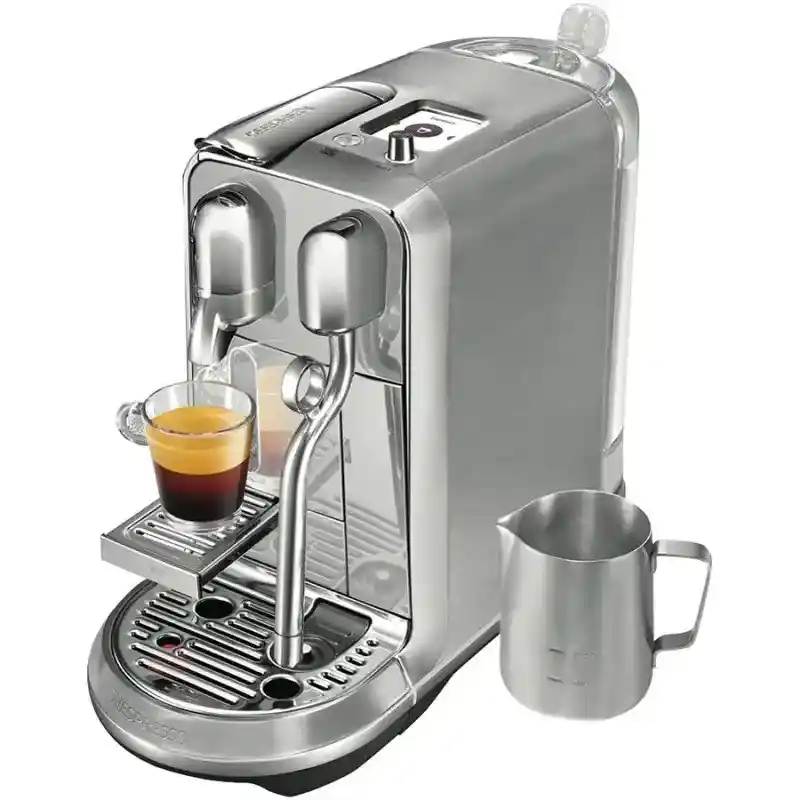
The Nespresso Creatista Plus professional steam cappuccino maker produces 8 milk froth textures. Quick heating in 3 seconds saves time in the morning. It is compatible with all Nespresso Original capsules.
The compact De’Longhi Citiz & Milk has a built-in Aeroccino frother for perfect froth. The programmable cup volume allows you to adjust the strength to your personal preferences.
The smallest in the Nespresso Essenza Mini range, it produces professional-quality espresso and lungo. Energy saving makes it economical to use.
The wide range of drinks in the Dolce Gusto Genio S Plus even includes cold cocktails. The intelligent barcode reader automatically adjusts the settings.
The aluminum body of the KRUPS Nespresso Pixie ensures durability. The powerful pump creates a stable pressure of 19 bar.
- Nespresso Creatista Plus, 30 000 UAH, professional cappuccino machine, 8 foam textures
- DeLonghi Citiz & Milk, UAH 13,000, Aeroccino, volume programming
- Nespresso Essenza Mini, 6 000 UAH, ultra-compact, energy saving
- KRUPS Dolce Gusto Genio S Plus, UAH 6,000, wide selection of drinks, smart features
- Nespresso Pixie, 7 000 UAH, speed, aluminum body
Coffee machines for the home on a budget
The price of a coffee machine often reflects the quality of its components and durability. Budget models up to 15,000 UAH are suitable for beginners or infrequent use. The middle segment of 15,000-30,000 UAH offers an optimal balance of features and quality.
Premium models over UAH 30,000 are justified for true enthusiasts or intensive use. De’Longhi offers quality solutions in all price categories, while Saeco specializes in the mid-range and premium segments.
Don’t skimp on the key components: the grinder, boiler, and cappuccino machine. It is better to buy a simple but reliable machine than a complex one with poor materials. Remember, a coffee machine is an investment for years, so think long-term.
Premium segment: the best models
Premium coffee machines over UAH 30,000 are justified for true coffee connoisseurs and heavy users. Saeco Xelsis offers 15 one-touch drinks, gesture control and personalization for up to 6 users. The coffee quality and durability are top-notch.
Jura and Miele represent Swiss and German engineering, respectively. These machines last for decades with proper care. Innovative technologies, such as the Jura PEP system or the Miele automatic cleaning system, justify the high price.
Who should make this investment? If you drink 4-5 cups of coffee every day, appreciate the variety of drinks, and are willing to pay for maximum convenience. It is also a good choice for those who see a coffee machine as a long-term investment and an element of kitchen prestige.
- Premium materials: stainless steel, ceramic millstones, glass tanks
- Advanced functionality: 10+ drinks, personalization, gesture control
- Innovative technologies: auto-cleaning, water quality sensors, AI optimization
- Professional quality: commercial components, restaurant-grade beverages
- Long-term warranty: 3-5 years, extended service support
Middle price segment: the best choice
The middle segment is 15,000-30,000 UAH, which is the golden mean for most buyers. The De’Longhi Magnifica S offers all the basic functions of an automatic machine at a reasonable price. Saeco Incanto pleases with its ease of use and coffee quality.
Here you get reliable components without unnecessary bells and whistles. A burr grinder, a cappuccino machine, and the ability to adjust the strength are all you need to enjoy your coffee every day. Machines in this segment serve for 5-7 years with regular maintenance.
The compromises relate mainly to additional features: fewer programs, a simpler display, and no smart connection. But the quality of the main drinks remains high. This is the best choice for families who value quality without overpaying for marketing gimmicks.
- De’Longhi Magnifica S, 18,000 UAH, basic machine, cappuccino machine
- Saeco Incanto, UAH 22,000, ceramic millstones, easy to use
- Philips 2200, UAH 19,000, LatteGo, intuitive operation
- Melitta Passione, 20,000 UAH, German quality, quiet operation
- Krups Evidence, UAH 25,000, metal case, programming
Budget models: quality solutions for reasonable money
Budget coffee machines under 15,000 UAH can surprise you with their quality if you choose the right one. The De’Longhi Stilosa for 12,000 UAH makes excellent espresso, although it requires manual frothing of milk. For beginners, this is a great way to master the art of coffee.
The main compromises are the lack of a built-in coffee grinder and an automatic cappuccino machine. But the quality of espresso can be as good as more expensive models. It is important to be realistic about your needs and not expect premium features from a budget machine.
These machines are ideal for students, young families, or as a second coffee machine for the office. They will teach you to understand coffee and allow you to save money on daily coffee in coffee shops. With careful use, they serve for 3-5 years.
- De’Longhi Stilosa, UAH 6,000, 15 bar, manual cappuccino machine
- Krups Calvi, UAH 9,000, compact, thermoblock
- Russell Hobbs Espresso, 8,000 UAH, basic functionality
- Polaris Adore Crema (discontinued), UAH 9,000, Ukrainian warranty
- Scarlett Espresso, 3 000 UAH, entry level
Care and maintenance of the coffee machine
Proper care prolongs the life of the machine and ensures consistent coffee quality. Daily cleaning takes 2-3 minutes, but prevents serious problems. Periodic maintenance includes decalcification and filter replacement.
The most common mistakes are ignoring the milk system and using poor quality water. Milk residues spoil quickly and can ruin the taste of coffee. Hard water leaves limescale, which destroys the heating elements.
Investing time in proper care will pay off in years of trouble-free operation. Most breakdowns can be prevented with simple preventive measures. A well-maintained coffee machine can last for 10-15 years.
Daily care and cleaning
Daily care begins with rinsing the water path after the last cup of the day. Simply run the cycle without coffee to remove any residue and prepare the machine for the next day. It takes 30 seconds, but prevents the build-up of contaminants.
The milk system requires special attention. After each use, rinse the frother with clean water and once a day with a special milk system cleaner. Milk proteins spoil quickly and can ruin the taste of subsequent drinks.
Remember to empty the drip tray and the coffee grounds container. A humid environment is conducive to the growth of bacteria and unpleasant odors. Wipe the machine with a damp cloth to maintain hygiene and aesthetics.
- Rinsing the water path after the last cup (30 seconds)
- Cleaning the frother with clean water after use (1 min)
- Empty the grounds tray and grounds container (daily)
- Wipe the body with a damp cloth (2 minutes)
- Replacing the water in the tank when it is idle for more than a day (1 min)
Periodic maintenance and decalcification
Decalcification, the most important procedure for the longevity of the coffee machine. The frequency depends on the water hardness: soft water, every 3-4 months, hard water, every month. Ignoring it leads to breakage of the heating elements and a deterioration in coffee taste.
Use only special decalcification products; household acids can damage the seal. The procedure takes 30-40 minutes, but most of the time the machine works automatically. Do not interrupt the process, as this may lead to a breakdown.
Signs of the need for decalcification: slow heating, low water pressure, strange taste of coffee. Modern machines themselves signal the need for the procedure. Do not delay, scale accumulates quickly and can lead to expensive repairs.
Frequently asked questions
What are the best coffee machines for home in 2026?
The De’Longhi Dinamica Plus is a leader among automatic models thanks to its reliability and functionality. Saeco GranAroma stands out for its innovation. For carob, the Gaggia Classic Pro. For capsule machines: Nespresso Creatista Plus. The choice depends on your budget and needs.
How to choose a coffee machine for your home?
The main criteria: power 1200-1500 W, pressure 9-15 bar, tank volume 1.5-2.5 liters. The type of coffee grinder is important (a grinder is better than a knife grinder), as well as the presence of a cappuccino maker. Consider the frequency of use, number of users, and favorite drinks.
What’s the difference between automatic, cone and capsule coffee machines?
Automatic machines make coffee at the touch of a button and have a built-in grinder. Carob machines give you full control but require skill. Capsule machines are the most convenient and fastest, but limited in the choice of flavors. Automatic, universal, carob, for enthusiasts, capsule, for convenience.
How much does a good home coffee machine cost?
Budget models: 5,000-15,000 UAH (basic functionality). Middle segment: 15,000-30,000 UAH (the best choice). Premium: over UAH 30,000 (maximum functionality). For most families, a car for 18,000-25,000 UAH with basic functions and reliable components is enough.
What are the advantages of coffee machines with an automatic frother?
The automatic frother ensures consistent milk froth quality, saves time and requires no skills. It controls the milk temperature (60-65°C) for optimal flavor. Convenient for daily use. The disadvantage is that it is more difficult to clean compared to a manual panarello.
How much pressure should be in the coffee machine to make high-quality coffee?
The optimal pressure for espresso is 9 bar. Many machines claim 15-19 bar, but the effective extraction pressure is still 9 bar. Lower pressure gives a weak extraction, higher pressure, over-extraction and bitterness. Pressure stability is more important than the maximum value.
What is the best budget coffee machine for home?
De’Longhi Stilosa for 12,000 UAH, the best budget choice. It makes high-quality espresso, has 15 bar of pressure, and a manual frother. Compact and reliable. Alternatives: Krups Calvi (8,000 UAH) and Polaris Adore Crema (9,000 UAH). All require a separate grinder.
How do I take care of my coffee machine to make it last longer?
Flush the water line and clean the milk system daily. Empty the drip tray and the grounds container. Decalcify every 2-3 months depending on water hardness. Use good quality water and special cleaning products. Do not ignore the maintenance signals.
Should I buy a coffee machine with a built-in grinder?
For example, the built-in burr grinder ensures fresh grinding just before brewing. This is crucial for the flavor of the coffee. Knife grinders are inferior and produce an uneven grind. A separate grinder may be of higher quality, but less convenient. For automatic machines, a built-in grinder is a must.