Espresso is not just a way of making coffee, but a real cultural revolution that changed the world. From the first steam machines in 19th century Italy to today’s automated systems, the story of espresso is one of innovation, passion and the pursuit of excellence.
The origins of espresso in Italy
The history of espresso begins in Italy in the mid-19th century, when coffee culture was already firmly rooted in the everyday life of Italians. However, the very concept of instant coffee under pressure emerged thanks to the Industrial Revolution.
In 1884, Angelo Moriondo from Turin received the first patent for a machine for making coffee using steam and pressure. His invention made it possible to prepare coffee faster than traditional methods. This was a key moment in the coffee industry.
The real turning point came in 1901, when Luigi Bezzera from Milan improved the Moriondo design. Bezzera created the first commercial espresso machine that could brew coffee in portions. His invention was called “caffè espresso”, which means “fast coffee” or “coffee to order” in Italian.
First steps of commercialization
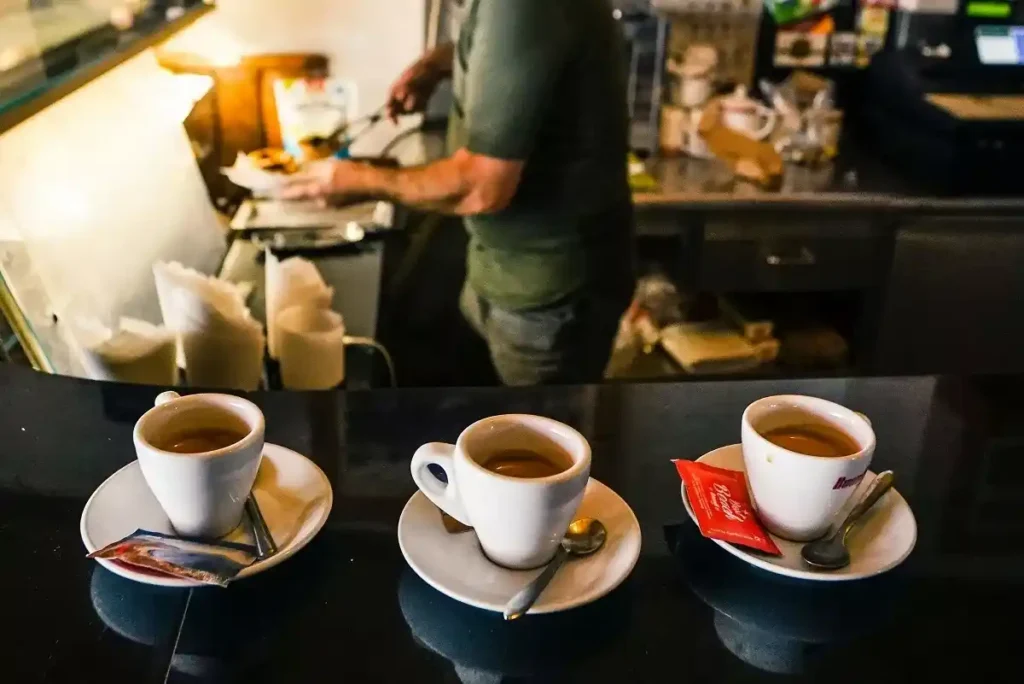
Desiderio Pavoni acquired Bezzera’s patent in 1903. He began mass production of espresso machines under the brand name “La Pavoni”. These machines quickly spread to coffee shops in Milan, and later throughout Italy.
Early espresso machines were powered by high-pressure steam. The temperature reached about 120°C. Although this ensured fast brewing, the high temperature often resulted in a bitter taste in the coffee.
Technological breakthroughs of the XX century
Hajji’s revolution
In 1938, Akille Gaja introduced a revolutionary innovation: the lever espresso machine. Instead of steam, Gaja’s machine used a piston mechanism that created a pressure of 8-10 atmospheres at an optimal temperature of 90-96°C.
This technology has dramatically changed the quality of espresso:
- Stable pressure ensures uniform extraction
- Controlled temperature reduced bitterness
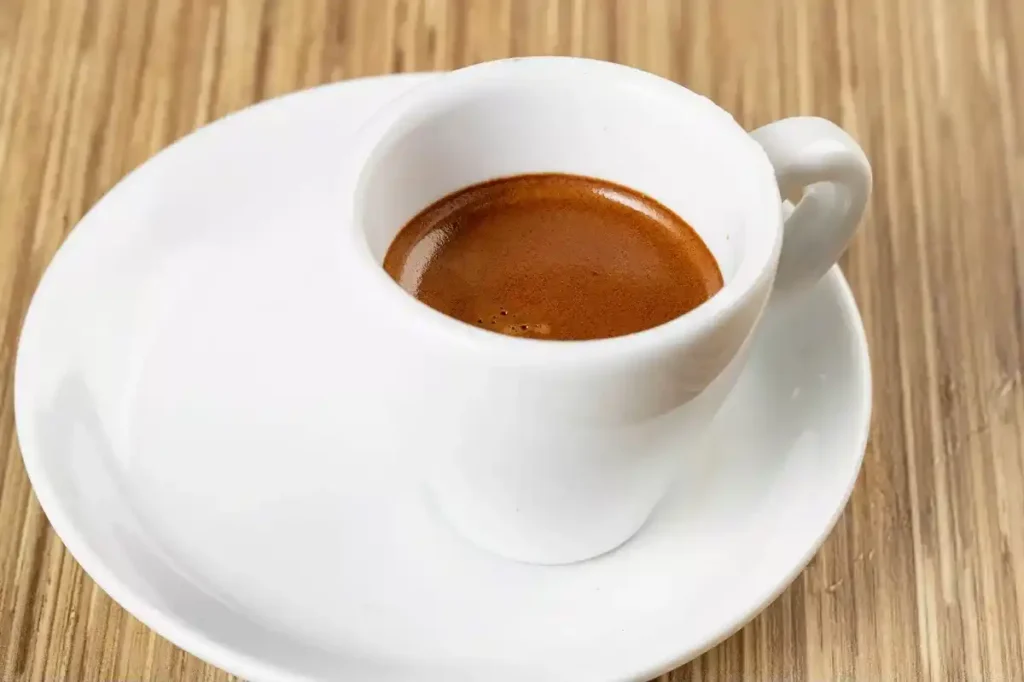
- The characteristic foam on the surface of the espresso was created for the first time
Postwar development
After the Second World War, Italian manufacturers were actively improving technologies. In 1947, Gaggia released an improved model, the Gaggia Classica, which became the standard for professional coffee shops.
Other Italian brands were developing in parallel:
- Faema presents first semi-automatic machines
- La Marzocco focuses on professional equipment
- Rancilio has developed compact solutions for small establishments
The spread of espresso in the world
European expansion
In the 1950s and 1960s, espresso began to conquer Europe. French coffee shops adapted Italian traditions to local tastes, creating a unique coffee culture. Switzerland and Austria also quickly adopted espresso, integrating it into their culinary traditions.
Germany became an important market for Italian machine manufacturers. German engineers began to develop their own improvements. They focused on automation and equipment reliability.
American market
The penetration of espresso into North America was gradual. Initially, Italian immigrants opened small coffee shops in densely populated areas. The real boom began in the 1960s thanks to the Starbucks chain, which popularized espresso drinks among a wide audience.
The American market has introduced its own peculiarities:
- Large portions of drinks have become the standard
- Syrups and spices have gained popularity
- Milk-based drinks (latte, cappuccino) have become the mainstream
Modern innovations and trends
The third wave of coffee
At the beginning of the 21st century, the “third wave of coffee” began. This is a movement that puts coffee on a par with wine in terms of complexity and sophistication. This has led to new standards in espresso brewing.
Key principles of the third wave
- Grain traceability from farm to cup
- Precise dosing and tempering
- Alternative brewing methods
Technological achievements
Modern espresso machines are equipped with sophisticated control systems:
| Parameter. | Traditional machines | Modern machines |
| Pressure | 9 bar | 9-15 bar (variable) |
| Temperature. | ±5°C | ±0.5°C |
| Extraction time | Manual control | Automatic programming |
| Quality control | Barista experience | Sensors and software |
Home espresso machines
The last two decades have seen a boom in home espresso machines. Manufacturers have adapted professional technologies for domestic use, making high-quality espresso available to ordinary consumers.
Popular categories of home machines:
- Capsule systems provide ease of use
- Semi-automatic offer a balance of control and convenience
- Manual machines provide maximum process control
Espresso as a cultural phenomenon
Italian coffee culture
In Italy, espresso remains an integral part of everyday life. Italians have developed a whole system of traditions around coffee consumption. Did you know that cappuccino in the afternoon is considered bad form in Italy?
- Morning espresso must be drunk standing at the bar
- Cappuccino is drunk only until 11 am
- Only pure espresso after meals, never with milk
Global adaptation
Each country has adapted espresso to local preferences. In France, café noisette appeared, in Australia, flat white, and in the Scandinavian countries, a culture of light roasting of beans developed.
Espresso has become the basis for many drinks:
- Americano espresso with hot water
- Espresso latte with plenty of milk
- Espresso cappuccino with equal parts milk and foam
- Espresso macchiato with a drop of milk
The future of espresso
Current trends point to the further evolution of espresso culture. Artificial intelligence is beginning to be implemented in professional machines to optimize extraction. Environmental aspects are becoming more and more important, from sustainable coffee cultivation to waste recycling.
New technologies promise even greater control over the cooking process. But the basic principles laid down by Italian pioneers more than a century ago remain unchanged.
Have you ever thought that every cup of espresso is the result of centuries of innovation? From Moriondo steam machines to modern AI systems, espresso continues to evolve while staying true to its Italian roots.
Frequently asked questions
Who invented espresso?
Angelo Moriondo invented the first machine in 1884, but Luigi Bezzera created the commercial version in 1901. It was Bezzera who received a patent for a machine for batch brewing coffee under pressure.
Why is espresso called this way?
The name comes from the Italian “caffè espresso”, which means “fast coffee” or “coffee to order”. The word emphasizes the main advantage of fast preparation.
When did espresso appear outside of Italy?
Espresso spread to Europe in the 1950s. In North America, it gained popularity in the 1960s and 1980s thanks to coffee chains and Italian immigrants.
What is the difference between old and modern espresso machines?
Early machines operated on steam at 120°C, which led to bitterness. Modern ones use a pressure of 9-15 bar at 90-96°C for better extraction.
What is the third wave of coffee?
This is an early 21st century movement that views coffee as an artisanal product. The emphasis is on the origin of the bean, the precision of preparation, and the disclosure of unique flavors.